

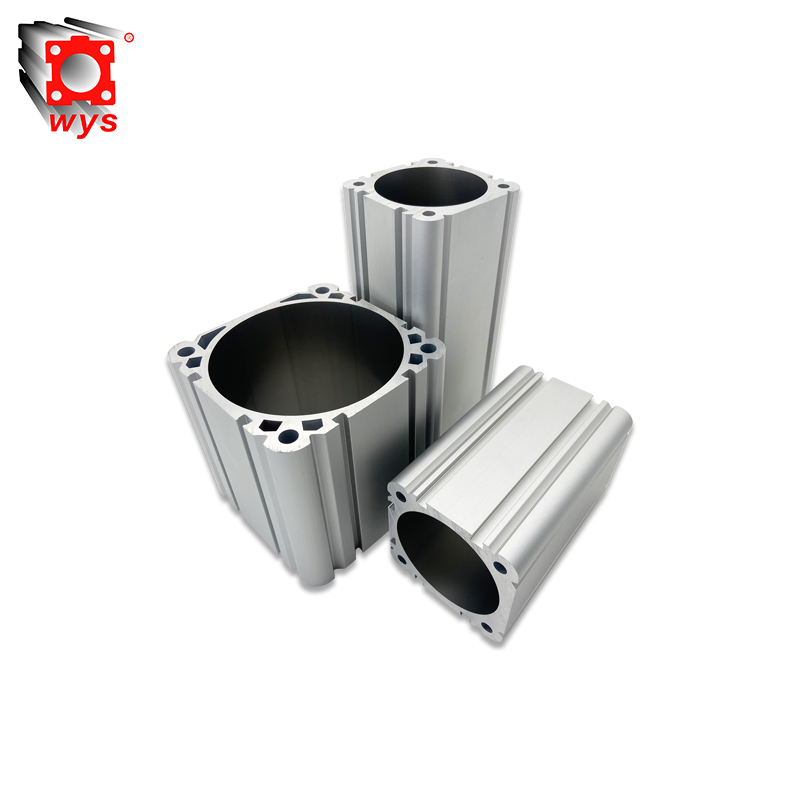
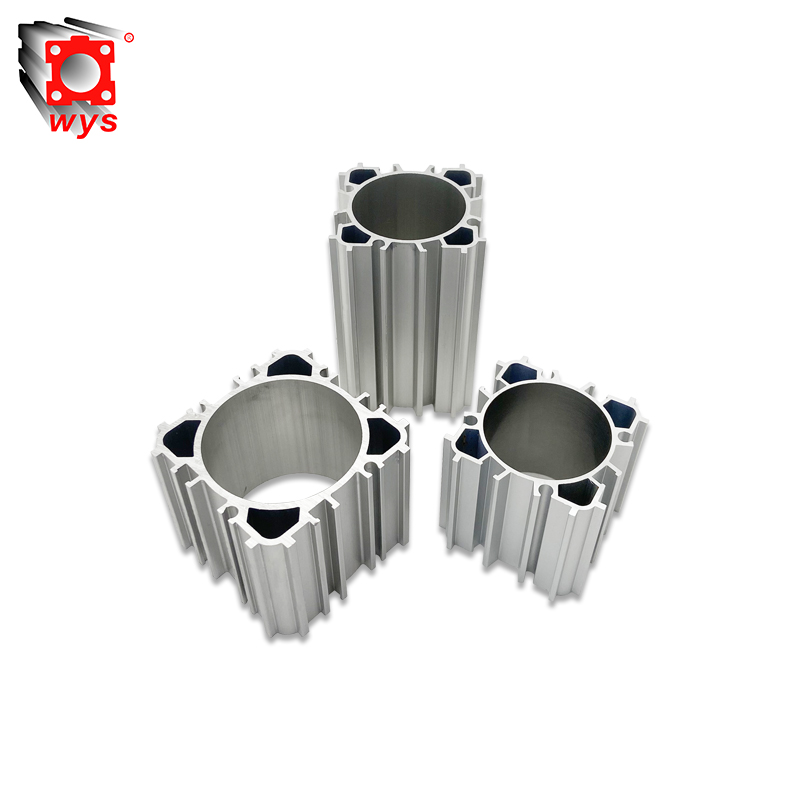
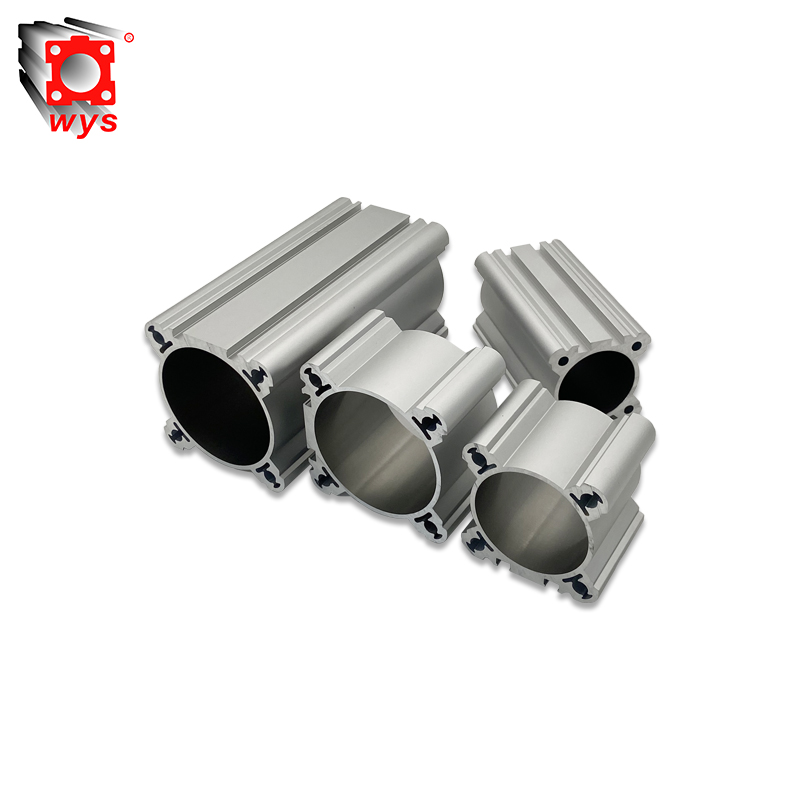
In the design, selection, and maintenance of pneumatic systems, questions about the internal structure of the pneumatic cylinder barrel are frequently raised. One very typical, yet easily misunderstood question is: Does a double-acting pneumatic cylinder tube contain a spring?
This question seems simple, but it actually involves the structural logic, working principle, force application, and the fundamental differences between single-acting and double-acting cylinders.
A lack of understanding of this issue can easily lead to incorrect judgments during selection, use, or modification, and even affect the stability of the entire pneumatic system.
This article will strictly focus on the core question of "Does a double-acting pneumatic cylinder barrel contain a spring?", providing a systematic, professional, and logically clear analysis from multiple dimensions, including basic concepts, structural design, and working mechanisms, to help you truly understand whether a spring is needed inside the pneumatic cylinder barrel, and why it is or isn't needed.
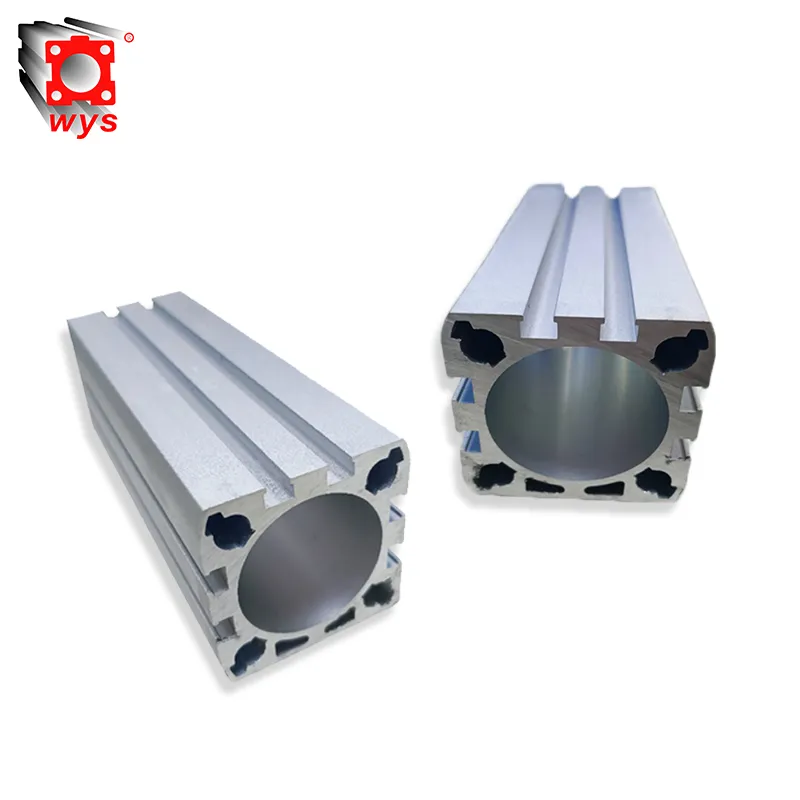
What is a pneumatic cylinder barrel?
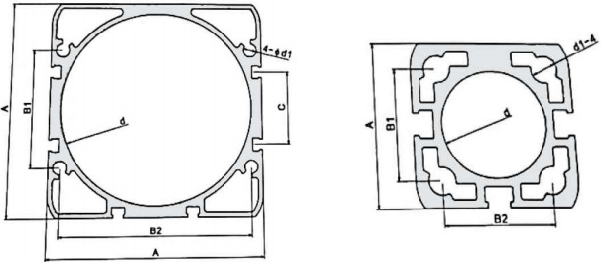
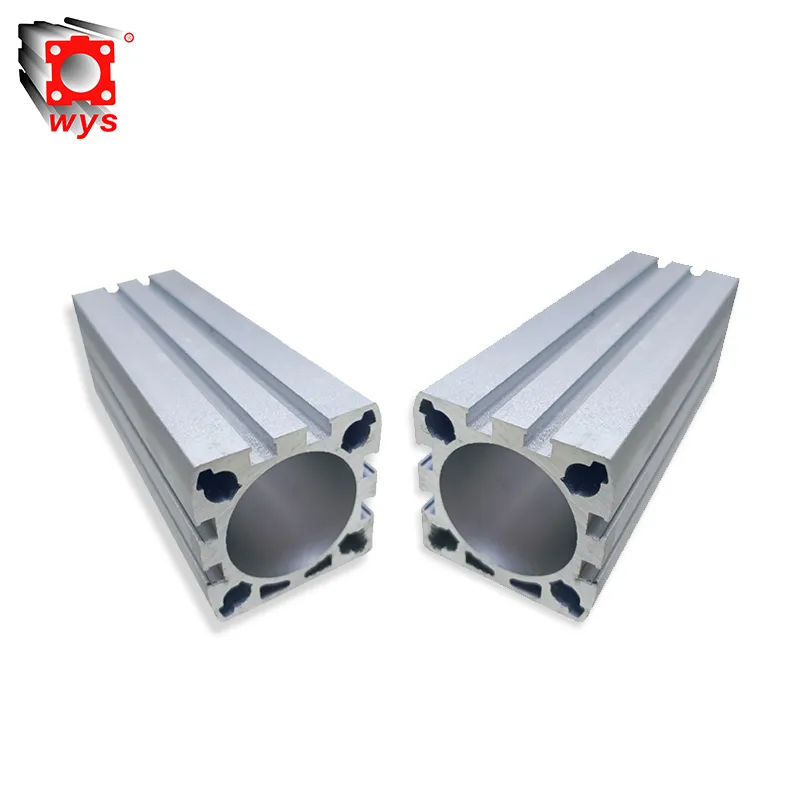
The pneumatic cylinder barrel is the main structural part of the cylinder, usually cylindrical in shape, used to house the piston, seals, and guiding components. It is the working space for the piston's linear reciprocating motion. In short, the pneumatic cylinder barrel is the core carrier for the cylinder's function.
The main functions of the pneumatic cylinder barrel include:
• Providing a sealed movement space for the piston
• Withstanding and transmitting the pressure generated by compressed air
• Ensuring internal sealing to prevent leakage
• Maintaining the coaxiality and stability of the piston's movement
• Reducing friction and wear, extending service life
Whether it's a single-acting or double-acting structure, the pneumatic cylinder barrel performs the same important functions, but there are significant differences in internal structural design and functional division.
What is a double-acting pneumatic cylinder tube?
What is its basic working principle?
To answer the question "Does a double-acting pneumatic cylinder tube contain a spring?", we must first understand what a double-acting pneumatic cylinder tube is.
Definition of a Double-acting Pneumatic Cylinder Barrel
A double-acting pneumatic cylinder barrel refers to a pneumatic structure where both the extension and retraction of the piston are driven by compressed air. That is, the reciprocating motion of the piston is entirely controlled by air pressure, not relying on a spring or external force.
Basic Operating Logic of a Double-Acting Pneumatic Cylinder Barrel
1. Compressed air enters one chamber of the pneumatic cylinder barrel.
2. This pushes the piston in one direction.
3. Simultaneously, air is exhausted from the other chamber.
4. After switching the air path, compressed air enters the other chamber.
5. This pushes the piston in the opposite direction.
During this process, the two chambers inside the pneumatic cylinder barrel are alternately pressurized, achieving continuous and controllable reciprocating motion.
Does a double-acting pneumatic cylinder tube really contain a spring?
Direct conclusion first:
Standard double-acting pneumatic cylinder tubes do not contain springs.
This is a very clear principle and a core principle in basic pneumatic design.
Why doesn't a double-acting pneumatic cylinder barrel need a spring?
This question is key to understanding "Does a double-acting pneumatic cylinder barrel have a spring?"
The driving logic of a double-acting pneumatic cylinder barrel dictates that a spring is not needed.
In a double-acting pneumatic cylinder barrel:
• The piston moves forward using air pressure.
• The piston returns using air pressure as well.
Because there is independent air pressure drive in both directions, no spring is needed to complete the return motion.
The essential function of a spring is:
To provide a return or reverse driving force in the absence of a power source.
Clearly, this is not needed in a double-acting pneumatic cylinder barrel.
So why do some people mistakenly believe that a double-acting pneumatic cylinder barrel contains a spring?
This is a very common misconception, mainly due to the following reasons:
1. Confusing the structural concept of a single-acting pneumatic cylinder tube
Single-acting pneumatic cylinder barrels usually have a built-in spring for piston return. Many people don't have a clear understanding of pneumatic cylinder barrel structures and mistakenly believe that "all cylinders have springs," thus incorrectly applying this to double-acting pneumatic cylinder tubes.
2. Confusing "cushioning structure" with "spring."
Some double-acting pneumatic cylinder barrels may have:
• Pneumatic cushioning
• Hydraulic cushioning
• Elastic cushioning pads
These components are not springs used for driving or return, but are used for deceleration, energy absorption, and reducing impact, and are completely different in function from return springs.
3. Lack of Understanding of the Internal Structure of Pneumatic Cylinder Barrels
The inside of a pneumatic cylinder barrel is a closed space, and many users have not actually disassembled and observed it, leading to misunderstandings based on assumptions.
Why is a spring necessary in a single-acting pneumatic cylinder barrel?
To further understand why there is no spring in a double-acting pneumatic cylinder barrel, it is necessary to compare it with a single-acting pneumatic cylinder barrel.
Key characteristics of a single-acting pneumatic cylinder barrel:
• Only one direction is driven by air pressure
• The other direction has no air pressure
• Must rely on a spring or external force to return to its original position
Therefore, in a single-acting pneumatic cylinder barrel:
The spring is an indispensable functional component.
In a double-acting pneumatic cylinder barrel, because there is air pressure in both directions, the spring becomes a redundant structure.
What would happen if a spring were added to a double-acting pneumatic cylinder tube?
This is a very worthwhile technical question to consider.
Is it theoretically feasible?
From a purely structural point of view, "putting a spring" inside the pneumatic cylinder barrel is not entirely physically impossible, but it is extremely unreasonable in engineering design.
What problems would it actually cause?
If a spring were forcibly added to a double-acting pneumatic cylinder tube, it could lead to:
• The spring and air pressure working against each other
• Complicated thrust calculations
• Unstable piston movement
• Abnormal stress on seals
• Reduced pneumatic cylinder barrel efficiency
Therefore, standard double-acting pneumatic cylinder barrels do not and should not have a spring structure.
What is the internal structure of a double-acting pneumatic cylinder tube?
To completely clarify the question of "does a double-acting pneumatic cylinder tube have a spring?", it is necessary to understand its typical internal structure.
Main internal components of a double-acting pneumatic cylinder tube:
• Pneumatic cylinder barrel body
• Piston assembly
• Piston rod
• Front and rear end caps
• Sealing system
• Guide ring
• Cushioning structure (optional)
As can be seen, in the standard structure, there is no return spring component.
What impact does the absence of a spring have on the performance of a double-acting pneumatic cylinder tube?
In fact, this is one of the important reasons why the performance of a double-acting pneumatic cylinder tube is superior to that of a single-acting structure.
1. More Stable Thrust
Without spring interference, the output force of the pneumatic cylinder barrel is entirely determined by air pressure, making it easier to calculate and control.
2. Smoother Movement
Avoids the non-linear changes caused by spring compression and release.
3. Higher Control Accuracy
Bidirectional air pressure drive makes the pneumatic cylinder barrel more suitable for precise control applications.
4. More Balanced Structural Stress
Seals and pistons operate under bidirectional pressure conditions, which better aligns with the design intent.
Will a double-acting pneumatic cylinder tube, without a spring, be unable to return to its original position?
This is a common question for many beginners.
The answer is: No.
The reason is simple:
• The return of a double-acting pneumatic cylinder barrel does not rely on a spring.
• Instead, it is achieved by supplying air to the other side of the cylinder.
As long as the pneumatic circuit design is reasonable and the air source is normal, the pneumatic cylinder barrel can perform reliable reciprocating motion.
What is the essential difference between a double-acting pneumatic cylinder tube and a "spring-loaded cylinder"?
Based on the analysis above, a clear conclusion can be drawn:
• Whether a spring is needed depends on whether the pneumatic cylinder barrel has bidirectional air pressure driving capability.
• Single-acting pneumatic cylinder barrel → Must have a spring
• Double-acting pneumatic cylinder barrel → Does not need a spring
This is a very basic but very important criterion in pneumatic system design.
When selecting a cylinder, should you worry about a double-acting pneumatic cylinder tube because it "doesn't have a spring"?
There is absolutely no need to worry.
On the contrary, the absence of a spring is one of the structural advantages of a double-acting pneumatic cylinder barrel, providing:
• Higher controllability
• More stable thrust output
• A wider range of applicable working conditions
As long as the system air source and control components are designed reasonably, the operation of the pneumatic cylinder barrel is completely reliable.
What production processes do you use for pneumatic cylinder barrels?
At our factory, every pneumatic cylinder undergoes a meticulous production process, including aluminum profile recycling, cold drawing, grinding, aging, polishing, sandblasting, CNC machining, and hard anodizing. Foshan Weiyingjia Technology Co., Ltd. ensures that every step meets high-quality standards.
Customers who buy from us benefit from a manufacturer committed to durability, precision, and performance, whether purchasing wholesale or small quantities for specialized applications.