

How Fast Can a Cylinder Move? — A Comprehensive Analysis from Pneumatic Principles to Structural Factors
In industrial automation equipment, cylinders are widely used due to their simple structure, fast response speed, and low cost. Many engineers, when designing or selecting pneumatic systems, often ask this question: How fast can a cylinder move?
The speed of a cylinder not only affects the efficiency of the equipment but also relates to system stability and mechanical lifespan. The upper limit of cylinder speed is not a fixed value; it is influenced by multiple factors, such as air source pressure, gas flow rate, control valve performance, and the structure of the pneumatic cylinder tube.
This article will systematically analyze the actual range of cylinder speed and the key factors affecting the speed of the pneumatic cylinder barrel from multiple perspectives, including pneumatic principles, structural design, flow control, and mechanical factors.
What is the typical speed of a cylinder?
In conventional industrial applications, the movement speed of a pneumatic cylinder typically falls within the following range:
0.1 m/s ~ 1.5 m/s
Speed may vary depending on the specific equipment requirements:
• Low-speed precision control: Approximately 0.01 m/s ~ 0.1 m/s
• General industrial equipment: Approximately 0.1 m/s ~ 0.8 m/s
• High-speed automated equipment: Approximately 0.8 m/s ~ 1.5 m/s
Under special design conditions, some pneumatic systems can even reach:
Above 2 m/s
However, in most industrial equipment, to ensure the stability and seal life of the pneumatic cylinder barrel, the speed is usually not designed to be too high.
How is the movement speed of a pneumatic cylinder generated?
To understand the speed limit of a pneumatic cylinder, it is first necessary to understand the principle of its motion generation.
Cylinder motion relies on compressed air driving a piston to reciprocate within the pneumatic cylinder tube.
The basic process is as follows:
1. Compressed air enters one side of the pneumatic cylinder tube.
2. Gas pressure acts on the piston surface.
3. The piston moves inside the pneumatic cylinder tube.
4. The piston rod transmits the motion to the external mechanism.
The cylinder's speed is mainly determined by the following formula:
Speed = Gas Flow Rate ÷ Effective Piston Area
From this relationship, it can be seen that the greater the gas flow rate, the faster the piston moves inside the pneumatic cylinder barrel.
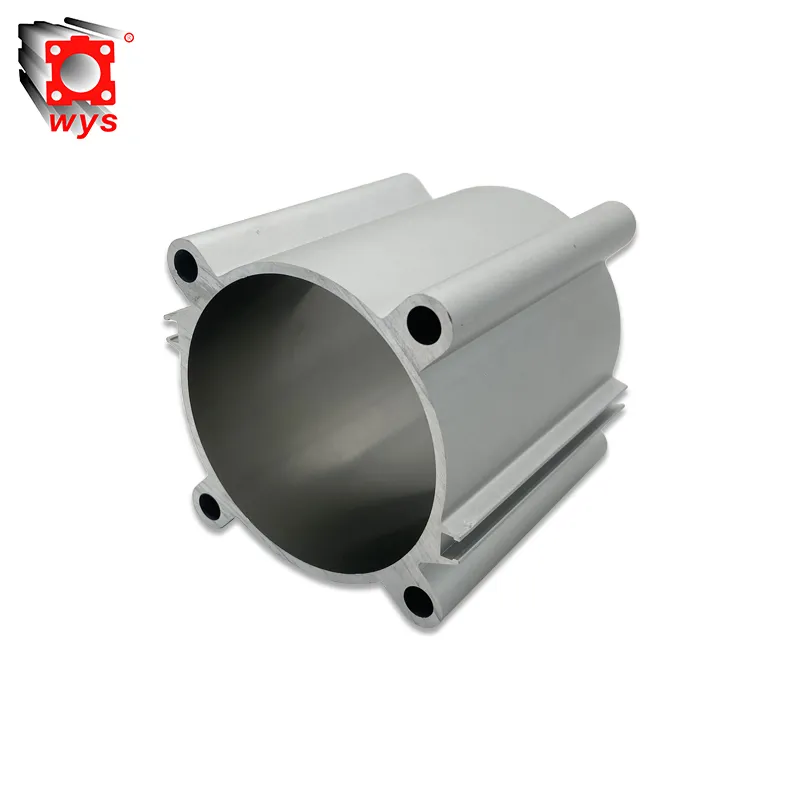
Does the size of the pneumatic cylinder barrel affect the cylinder's speed?
The structural dimensions of the pneumatic cylinder barrel are one of the important factors affecting the cylinder's speed.
How does the diameter of the pneumatic cylinder barrel affect the speed?
The larger the diameter of the pneumatic cylinder barrel:
• The larger the piston area
• The greater the thrust
But at the same time:
• More airflow is required
• The speed will decrease under the same air supply conditions
Therefore, pneumatic cylinder barrels with larger diameters generally have lower speeds, while pneumatic cylinder tubes with smaller diameters are more likely to achieve high-speed movement.
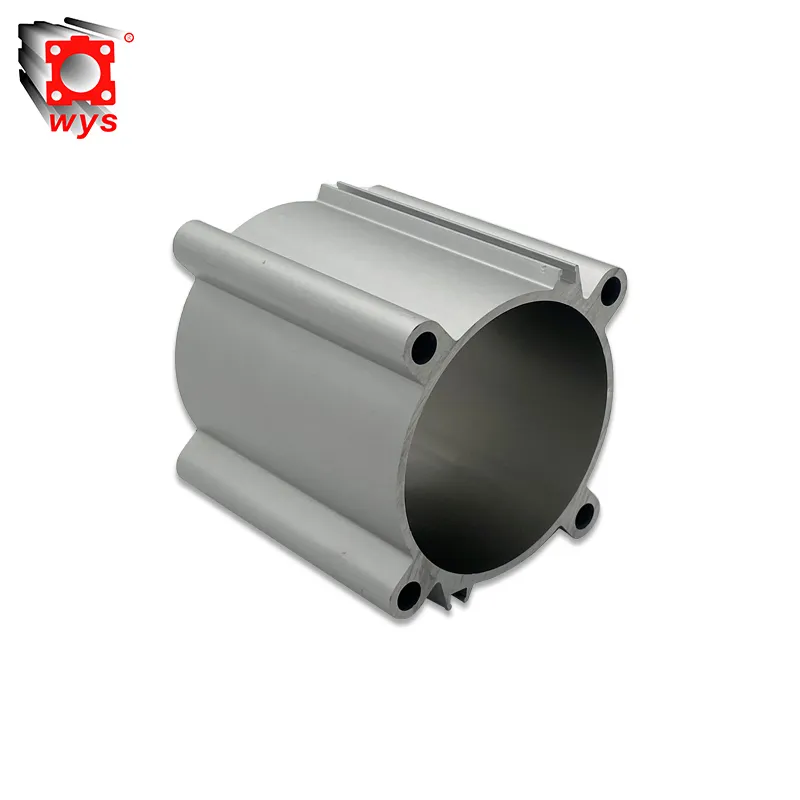
Does the stroke of the pneumatic cylinder tube limit the speed?
The stroke of the pneumatic cylinder tube determines the distance the piston travels.
With a longer stroke:
• The piston travels for a longer time.
• Acceleration and deceleration are more pronounced.
If the pneumatic cylinder tube is poorly designed, high-speed operation may cause:
• Shocks
• Vibration
• Increased seal wear.
Therefore, long-stroke pneumatic cylinder barrels typically require reduced operating speeds.
Does the supply air pressure determine cylinder speed?
Supply air pressure is an important factor affecting cylinder speed, but it is not the only determining factor.
Within a certain range:
• Higher pressure results in a greater force pushing the piston.
• Higher piston acceleration within the pneumatic cylinder barrel.
However, the speed is often truly limited by the gas flow rate.
If the gas supply pressure is high but the flow rate is insufficient, the piston within the pneumatic cylinder barrel will still not be able to move quickly.
Therefore, in pneumatic system design, it is necessary to consider simultaneously:
• Pressure
• Flow rate
to achieve the ideal speed.
Do control valves and piping affect the speed of the pneumatic cylinder tube?
Often, the speed of a pneumatic cylinder is not determined by the pneumatic cylinder tube itself, but rather by the control system.
1. Control Valve Flow Capacity
The flow capacity of the solenoid valve or directional valve determines the amount of air entering the pneumatic cylinder tube.
If the valve flow rate is low:
• Insufficient air supply to the pneumatic cylinder tube
• Decreased piston speed
Therefore, high-speed pneumatic systems typically require high-flow valves.
2. Pipe Diameter and Length
The piping in a pneumatic system also affects speed.
If the piping:
• Too small a diameter
• Too long
• Too many bends
This will increase airflow resistance, thus reducing the airflow into the pneumatic cylinder barrel.
This directly affects the piston's speed within the pneumatic cylinder barrel.
Do Friction and Load Affect Cylinder Speed?
Pneumatic cylinder movement is affected not only by gaseous factors but also by mechanical factors.
1. Internal Friction of the Pneumatic Cylinder Barrel
There is friction between the inner wall of the pneumatic cylinder barrel and the piston seal.
• Insufficient Lubrication
• Inner Wall Wear
• Aging Seals
These conditions will all increase friction, thus reducing piston speed.
2. External Load Effects
The greater the load connected to the piston rod, the greater the resistance to movement.
When the load is heavy:
• Reduced Piston Acceleration
• Decreased Pneumatic Cylinder Barrel Speed
Therefore, in high-speed applications, it is usually necessary to reduce the load or increase the cylinder size.
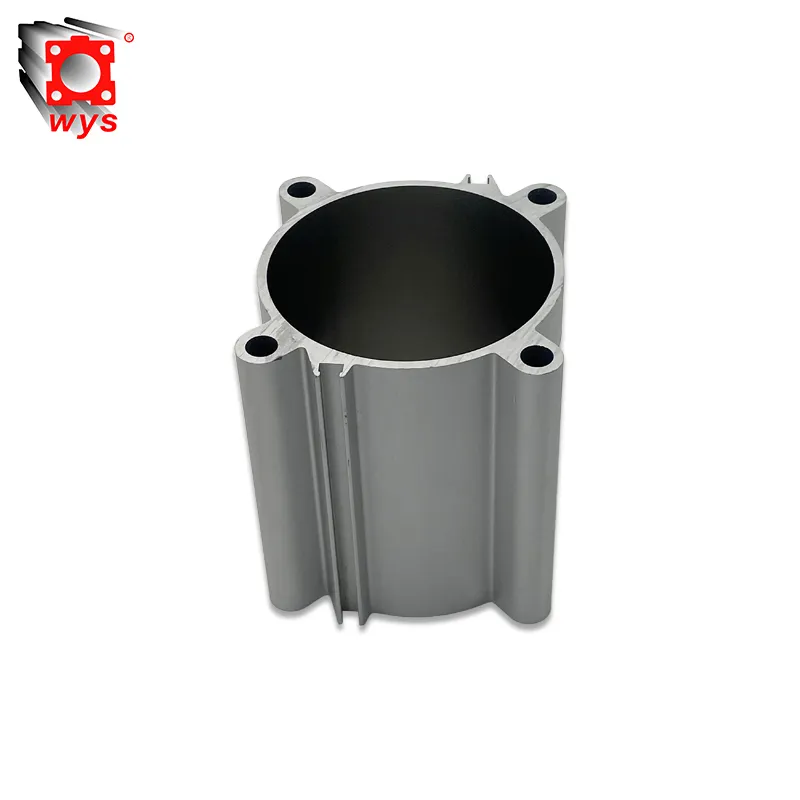
What problems arise from high-speed operation of the pneumatic cylinder tube?
Although cylinder speeds can be designed to be very high, excessively high speeds can cause some technical problems.
1. Increased Impact
When the piston reaches the end of the pneumatic cylinder tube at high speed, the impact force increases significantly.
Without a buffer, the following may occur:
• End cap damage
• Seal wear
• Structural fatigue
2. Increased Seal Wear
High-speed motion increases the internal friction frequency of the pneumatic cylinder tube, leading to:
• Shortened seal life
• Decreased airtightness
3. Vibration and Noise
High-speed motion may also generate:
• Mechanical vibration
• Airflow noise
These factors all affect equipment stability.
How to increase cylinder speed while maintaining stability?
To increase the movement speed of the pneumatic cylinder tube, several optimizations can be made:
1. Increase air supply flow
Choose a compressed air supply system with a higher flow rate.
2. Select a high-flow control valve
Ensure that gas can enter the pneumatic cylinder tube quickly.
3. Optimize piping design
Reduce:
• Pipeline length
• Number of bends
4. Reduce friction
Reduce internal frictional resistance through good lubrication and high-precision machining of the pneumatic cylinder tube.
5. Use a buffer structure
To prevent the piston from impacting the pneumatic cylinder barrel end cap during high-speed operation.
How does the pneumatic cylinder tube structure affect speed stability?
The machining precision of the pneumatic cylinder tube directly affects the piston's motion stability.
High-quality pneumatic cylinder tubes typically possess:
• High-precision inner wall machining
• Good roundness and straightness
• Smooth surface
These factors can:
• Reduce friction
• Improve sealing performance
• Ensure high-speed motion stability
Therefore, the manufacturing quality of the pneumatic cylinder tube is crucial in high-speed pneumatic systems.
How fast can a cylinder move?
Based on pneumatic principles and structural factors, the following conclusions can be drawn:
1. The typical cylinder speed is approximately 0.1 m/s to 1.5 m/s.
2. Specially designed pneumatic systems can achieve speeds exceeding 2 m/s.
3. Cylinder speed is influenced by the following factors:
• Air source pressure
• Gas flow rate
• Control valve performance
• Piping design
• External load
• Pneumatic cylinder barrel structure
Among these, the pneumatic cylinder barrel not only determines the piston movement space but also affects friction, sealing, and stability, making it a crucial structural factor influencing cylinder speed.