

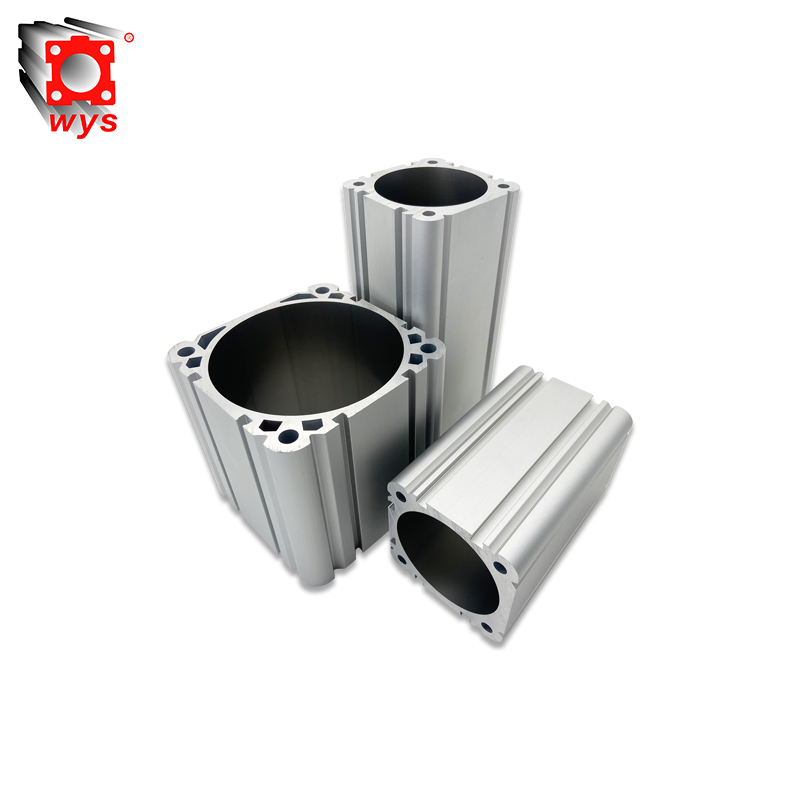
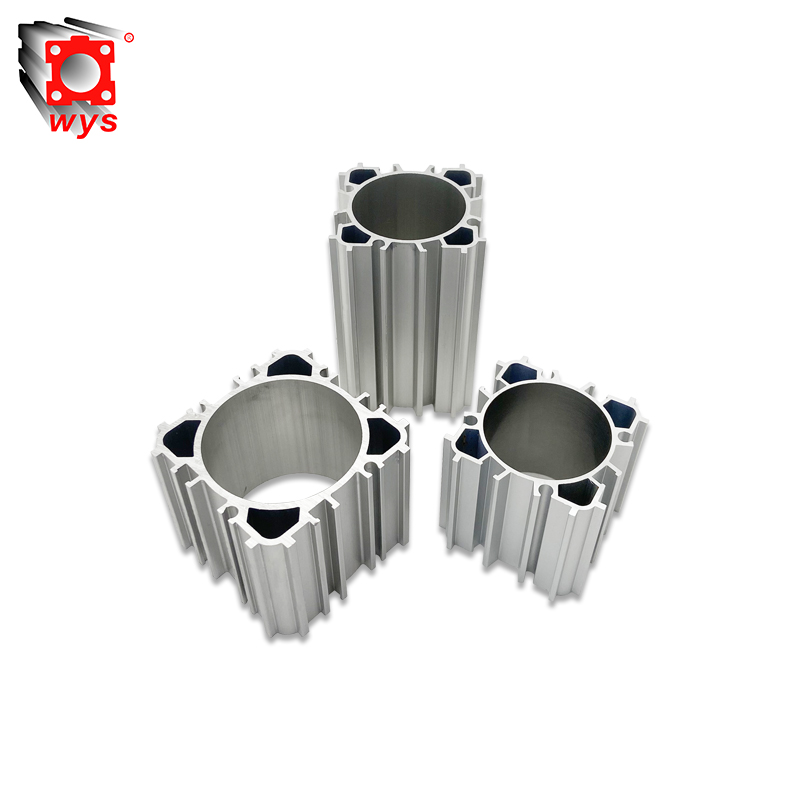
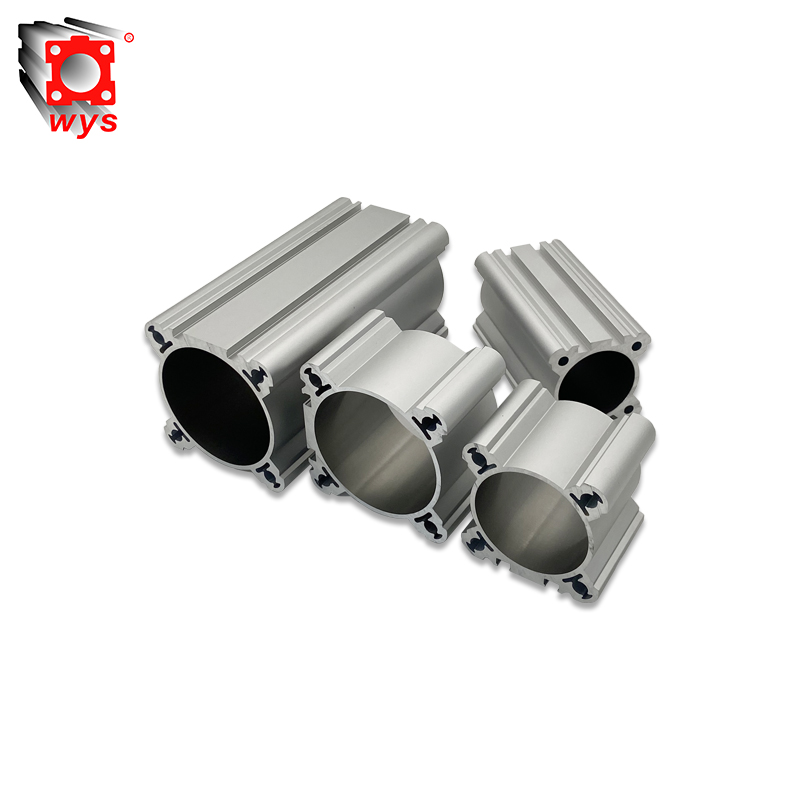
In pneumatic system design, the cylinder serves as the core actuating element; consequently, its structural safety and operational stability are of paramount importance. Among the critical components of a cylinder, the pneumatic cylinder barrel not only fulfills the multiple functions of sealing, guiding, and pressure containment, but also stands as one of the core structural components that determine the cylinder's overall strength and service life.
Among the numerous design parameters, the wall thickness of the pneumatic cylinder barrel is often regarded as a fundamental yet critically important metric. If the wall thickness is insufficient, the barrel may deform or even rupture under pressure; conversely, if the wall thickness is excessive, it increases material costs and weight, while also compromising the system's response efficiency.
Therefore, the accurate calculation of the pneumatic cylinder barrel's wall thickness is an indispensable step in the design of pneumatic equipment.
So, how exactly should the wall thickness of a pneumatic cylinder barrel be calculated? What factors must be taken into consideration? Are there any universal formulas available for reference?
This article will provide a systematic analysis covering various aspects—including theoretical foundations, calculation methodologies, and practical design considerations—to help readers establish a comprehensive framework of understanding.
Why Does Pneumatic Cylinder Barrel Wall Thickness Require Precise Calculation?
In a pneumatic system, the interior of the cylinder barrel is subjected to pressure generated by compressed air. Although this pressure is relatively lower than that found in hydraulic systems, it nonetheless exerts continuous stress upon the cylinder barrel.
If the wall thickness of the pneumatic cylinder barrel is designed improperly, it may lead to the following issues:
• Insufficient Wall Thickness: Results in inadequate structural strength, leading to bulging, deformation, or even rupture.
• Excessive Wall Thickness: Increases weight and material costs while simultaneously reducing the system's response speed.
• Localized Stress Concentration: Compromises the long-term reliability and durability of the cylinder barrel.
Consequently, the wall thickness of a pneumatic cylinder barrel must be determined through rigorous calculation rather than being arbitrarily assigned based solely on empirical judgment.
What Are the Fundamental Principles Behind Calculating Pneumatic Cylinder Barrel Wall Thickness?
During operation, a pneumatic cylinder barrel can essentially be modeled as a cylindrical structure subjected to internal pressure. In the field of engineering mechanics, such structures are typically analyzed as either "thin-walled cylinders" or "thick-walled cylinders."
For the majority of pneumatic cylinder barrels, given that their wall thickness is relatively small compared to their inner diameter, they can typically be analyzed and calculated using the principles applicable to thin-walled cylinders. The fundamental formula is:
σ = (P × D) / (2 × t)
Where:
•σ: Allowable stress of the material
•P: Internal pressure
•D: Inner diameter of the pneumatic cylinder barrel
•t: Wall thickness
By rearranging the formula, the expression for calculating the wall thickness of the pneumatic cylinder barrel can be derived:
t = (P × D) / (2 × σ)
This serves as the foundational formula for calculating the wall thickness of a pneumatic cylinder barrel.
How is the pressure determined when calculating the wall thickness of a pneumatic cylinder barrel?
When calculating the wall thickness of a pneumatic cylinder barrel, pressure is one of the most critical parameters.
Typically, the following types of pressure must be considered:
1. Working Pressure
The pressure present during the normal operation of the pneumatic system; this forms the basis for the design of the pneumatic cylinder barrel.
2. Peak Pressure
In certain situations, the pneumatic system may experience transient pressure fluctuations; therefore, the maximum pressure value must be taken into account.
3. Safety Factor
To ensure the reliability of the pneumatic cylinder barrel, a safety factor is typically incorporated into the calculations.
Consequently, in practical calculations, the following should be used:
Design Pressure = Maximum Working Pressure × Safety Factor
This approach enhances the safety of the pneumatic cylinder barrel.
How does the material strength of a pneumatic cylinder barrel affect wall thickness calculations?
The material used for the pneumatic cylinder barrel directly determines its allowable stress value, thereby influencing the results of the wall thickness calculation.
Common materials include:
•Aluminum alloys
•Carbon steel
•Stainless steel
Different materials possess varying tensile strengths and yield strengths; consequently, their allowable stress values also differ.
Generally speaking:
•Materials with high strength → require a thinner wall thickness
•Materials with low strength → require a thicker wall thickness
Therefore, when calculating the wall thickness of a pneumatic cylinder barrel, it is essential to select the appropriate stress value based on the specific material being used.
Why is it insufficient to rely solely on theoretical formulas to calculate the wall thickness of a pneumatic cylinder barrel?
Although formulas can provide a foundational calculation result, in actual engineering practice, relying exclusively on theoretical formulas is insufficient.
The reasons for this include:
1. Manufacturing Tolerances
The pneumatic cylinder barrel will inevitably exhibit certain dimensional errors during the manufacturing process.
2. Material Non-uniformity
The actual properties of the material may be subject to variation.
3. Environmental Influences
Factors such as temperature, humidity, and corrosion can all impact the performance of the pneumatic cylinder barrel. Therefore, based on theoretical calculations, appropriate adjustments must be made to ensure the safety and reliability of the pneumatic cylinder barrel.
What is the relationship between the wall thickness and the inner diameter of a pneumatic cylinder tube?
As indicated by the relevant formulas, the wall thickness of a pneumatic cylinder tube is directly proportional to its inner diameter.
In other words:
•The larger the inner diameter → the greater the required wall thickness.
•The smaller the inner diameter → the relatively lower the required wall thickness.
This is because a larger pneumatic cylinder tube is subjected to a greater total force under the same internal pressure.
Consequently, when designing large-bore pneumatic cylinder tubes, particular attention must be paid to the design of the wall thickness.
What problems can arise if the pneumatic cylinder tube wall thickness is excessive?
While increasing wall thickness can enhance structural strength, an excessive thickness can also lead to negative consequences.
For example:
•Increased material costs.
•Increased overall weight of the equipment.
•Reduced response speed of the cylinder.
•Increased manufacturing difficulty.
Therefore, the design of the pneumatic cylinder tube's wall thickness requires striking a balance between structural strength and economic efficiency.
Is it necessary to consider the fatigue strength of the pneumatic cylinder tube?
In pneumatic systems, cylinders typically undergo high-frequency reciprocating motion; consequently, the pneumatic cylinder tube is subjected to repetitive loading.
Under these conditions, fatigue strength becomes a critical factor.
If the wall thickness of the pneumatic cylinder tube is insufficiently designed, prolonged cyclic loading may lead to:
•The initiation of micro-cracks.
•Crack propagation.
•Ultimate structural failure.
Therefore, the expected fatigue life should be taken into account when designing the wall thickness of a pneumatic cylinder tube.
Do manufacturing processes need to be considered when calculating the pneumatic cylinder tube's wall thickness?
Manufacturing processes also play a role in influencing the design of the pneumatic cylinder tube's wall thickness.
For example:
•Honing operations require the provision of a machining allowance.
•Surface treatments may alter the dimensions.
•Welded structures may introduce residual stresses.
Therefore, during the design phase, it is essential to allocate appropriate machining allowances to ensure that the final dimensions of the pneumatic cylinder tube meet the specified requirements.
How is the wall thickness of a pneumatic cylinder barrel determined in actual design practice?
In practical engineering applications, the wall thickness of a pneumatic cylinder barrel is typically determined through the following steps:
1.Determine the operating pressure and maximum pressure.
2.Select the material for the pneumatic cylinder barrel.
3.Perform preliminary calculations using relevant formulas.
4.Apply a safety factor to make necessary adjustments.
5. Account for machining allowances and tolerances.
6. Conduct a comprehensive evaluation of structural strength versus cost.
Through this process, a reasonably optimal design value for the pneumatic cylinder barrel's wall thickness can be derived.
Why is a properly designed pneumatic cylinder tube wall thickness so critical?
A well-designed wall thickness for a pneumatic cylinder tube not only ensures the safety of the cylinder but also impacts the following aspects:
•System stability
•Energy efficiency
•Equipment service life
•Maintenance costs
A properly designed pneumatic cylinder tube achieves an optimal balance between performance and cost while simultaneously guaranteeing safety.