

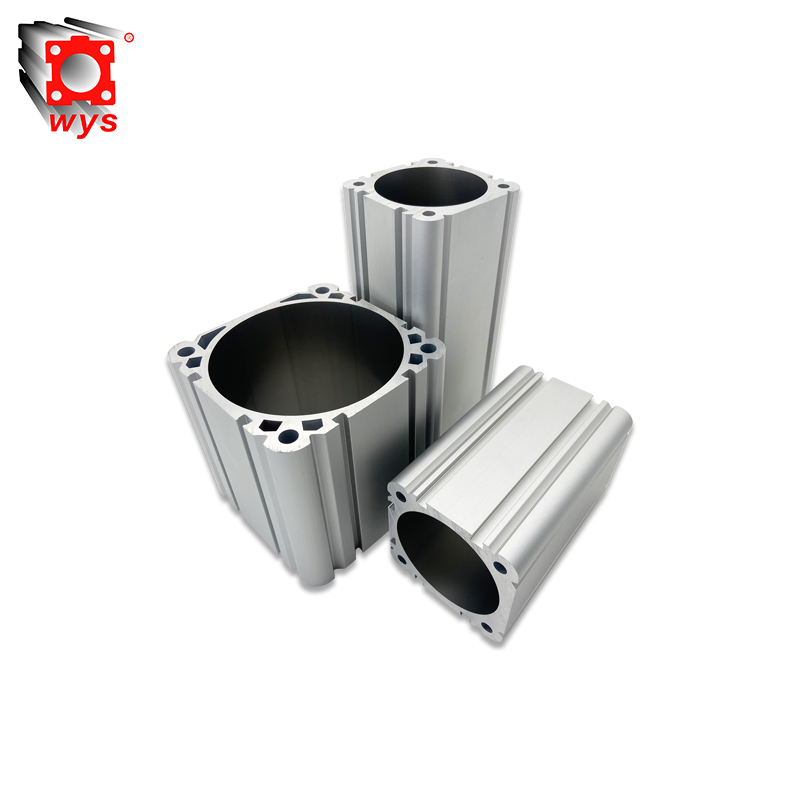
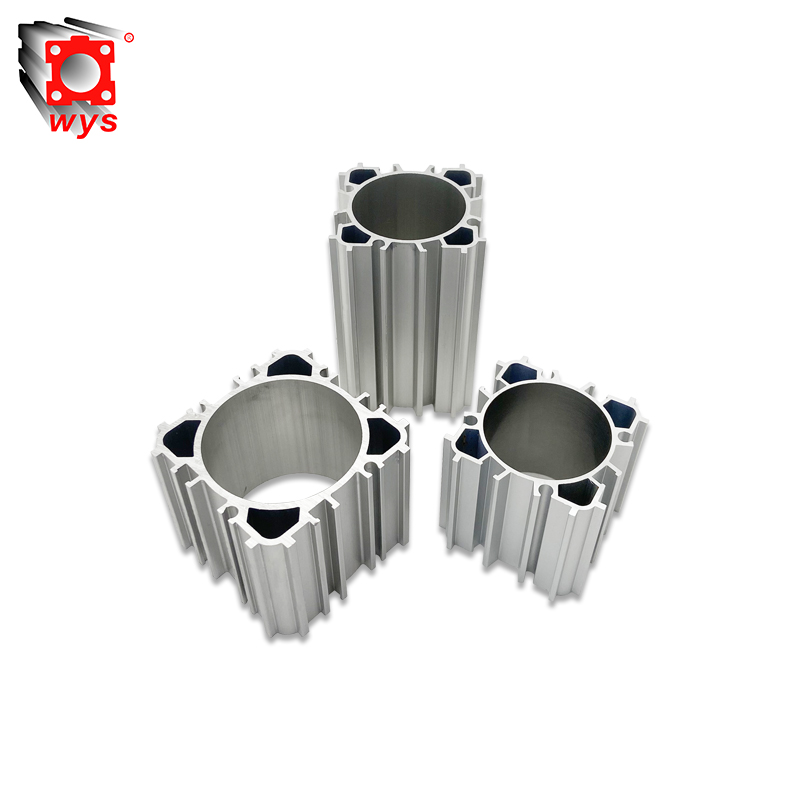
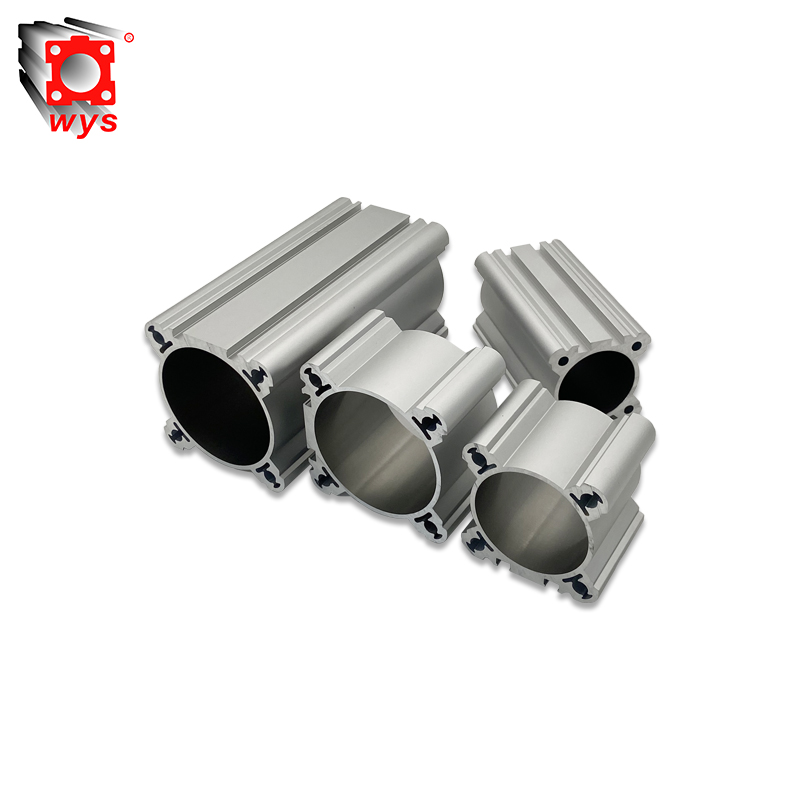
In pneumatic systems, cylinders are generally classified as single-acting or double-acting cylinders based on their driving method. Regardless of the structural form, the core of the cylinder relies on a crucial component—the pneumatic cylinder barrel.
Many people, when selecting or understanding pneumatic systems, tend to focus on the terms "single-acting" and "double-acting" themselves, neglecting an important question:
Are there fundamental differences in structure and working logic between single-acting and double-acting pneumatic cylinder tubes?
This article will take a professional perspective, systematically analyzing the differences between single-acting and double-acting pneumatic cylinder barrels, focusing on this core component, to help you establish a clear and accurate understanding from a fundamental perspective.
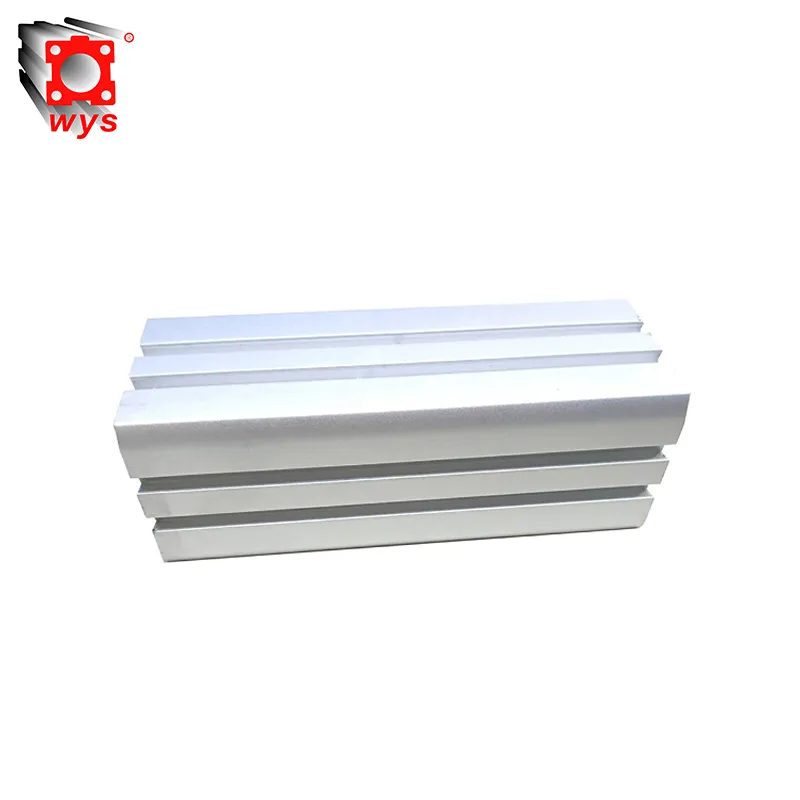
What is a single-acting pneumatic cylinder barrel?
A single-acting pneumatic cylinder barrel refers to a structure that withstands compressed air action in only one direction.
In this structure:
• Compressed air enters only one side of the pneumatic cylinder barrel.
• The piston moves in one direction under air pressure.
• The return stroke is completed by spring force or external mechanical force.
Essentially, a single-acting pneumatic cylinder barrel provides a unidirectional effective working chamber.
What is a double-acting pneumatic cylinder barrel?
In contrast to the single-acting structure, the double-acting pneumatic cylinder barrel is more widely used in pneumatic systems.
A double-acting pneumatic cylinder barrel means that compressed air can alternately enter both sides of the pneumatic cylinder barrel, thus achieving bidirectional piston drive.
Its basic characteristics include:
• The pneumatic cylinder barrel is divided into two independent chambers by the piston.
• Compressed air can act on both sides alternately.
• The piston's extension and return strokes are both directly driven by air pressure.
Therefore, the double-acting pneumatic cylinder barrel is always in a controlled state throughout the reciprocating process.
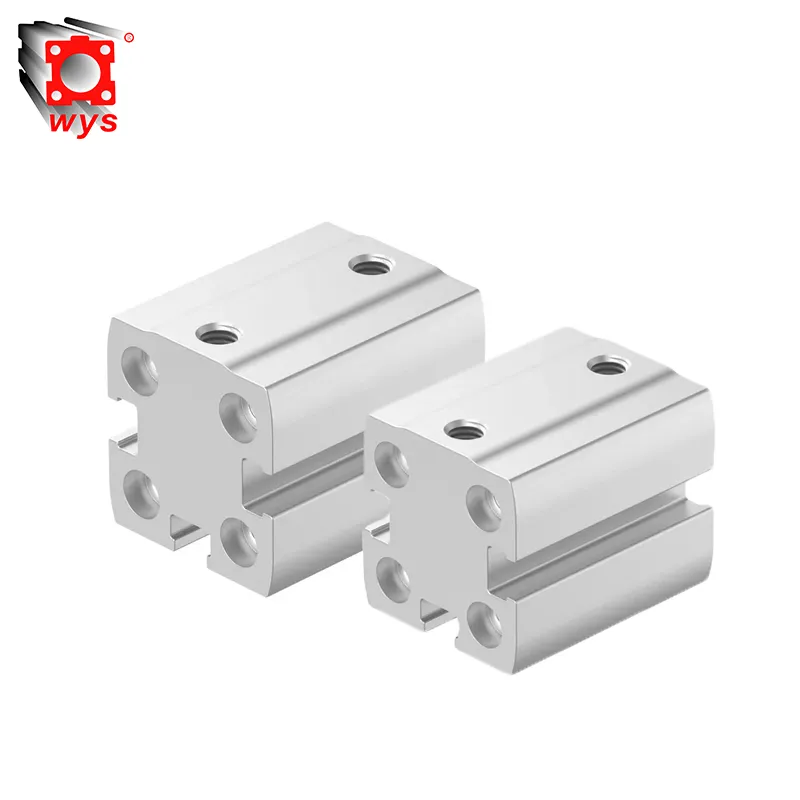
What are the differences in the working principles of single-acting and double-acting pneumatic cylinder barrels?
What is the working principle of a single-acting pneumatic cylinder barrel?
In a single-acting pneumatic cylinder tube, the working principle can be summarized as follows:
1. Compressed air enters one side of the pneumatic cylinder tube.
2. Air pressure drives the piston axially.
3. When the air pressure is released, the piston returns due to a spring or external force.
This means that the pneumatic cylinder barrel only participates in the pneumatic drive process in one direction.
What are the characteristics of the working principle of a double-acting pneumatic cylinder tube?
The working principle of a double-acting pneumatic cylinder tube is more symmetrical:
1. Compressed air enters one side of the pneumatic cylinder barrel, pushing the piston forward.
2. Air is simultaneously discharged from the other side.
3. After reversing direction, compressed air enters the other side.
4. The piston returns under the action of reverse air pressure.
Throughout the entire process, the pneumatic cylinder tube always functions as a complete pressure-bearing and sealed space.
What are the differences in the internal structure of the two types of pneumatic cylinder barrels?
Differences in internal cavity structure
• Single-acting pneumatic cylinder barrel:
Usually, only one side is the effective working cavity; the other side may be used to install springs or auxiliary components.
• Double-acting pneumatic cylinder barrel:
Internally, it is divided into two symmetrical or asymmetrical working chambers by a piston. Both ends of the pneumatic cylinder barrel participate in pressure bearing.
Differences in Port and Interface Arrangement
From a structural perspective:
• Single-acting pneumatic cylinder tubes typically require only one air inlet.
• Double-acting pneumatic cylinder tubes typically require two independent air inlet and exhaust ports.
This directly reflects the difference in air path control and force distribution between pneumatic cylinder tubes.
What are the differences in force distribution between single-acting and double-acting pneumatic cylinder tubes?
Force characteristics of a single-acting pneumatic cylinder tube
In a single-acting structure:
• The pneumatic cylinder tube bears unidirectional air pressure during the working stroke.
• During the return stroke, it mainly bears mechanical elasticity or external forces.
• The internal pressure change is relatively simple.
Therefore, the force distribution mode of a single-acting pneumatic cylinder tube is relatively simple.
Stress Characteristics of a Double-Acting Pneumatic Cylinder Barrel
A double-acting pneumatic cylinder barrel faces more complex operating conditions:
• It bears air pressure in both directions.
• The inner wall is under alternating pressure for extended periods.
• Pressure cycles are more frequent.
This places higher demands on the structural strength, machining precision, and stability of the pneumatic cylinder tube.
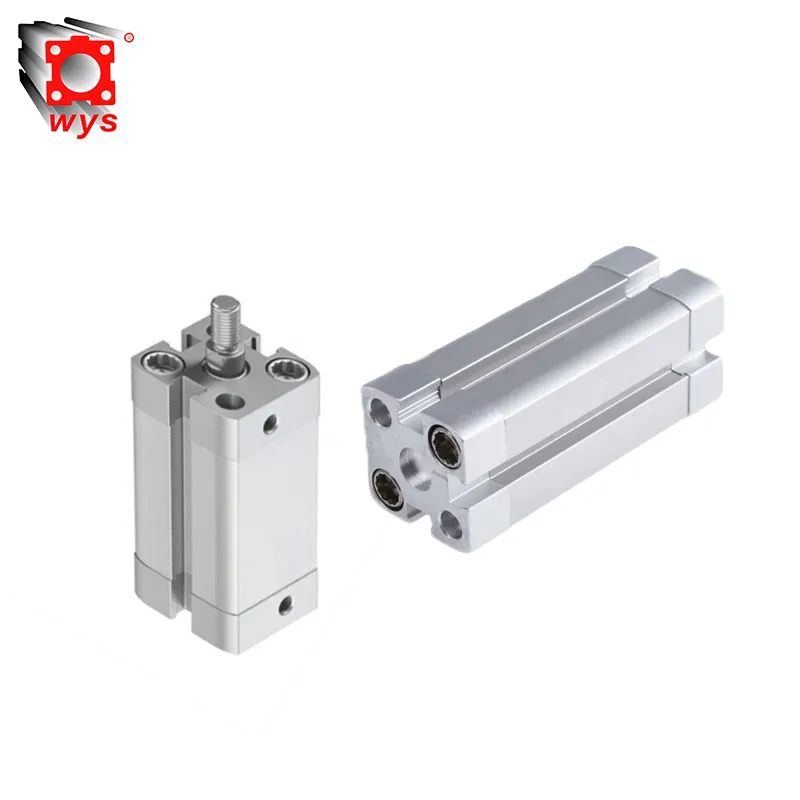
Do the sealing requirements differ between the two types of pneumatic cylinder barrels?
Sealing Characteristics of a Single-Acting Pneumatic Cylinder Barrel
Since only one side is the main working chamber, the sealing system of a single-acting pneumatic cylinder tube:
• Has a relatively singular sealing direction.
• The dynamic sealing conditions are relatively simple.
• The range of stress variation on the sealing element is smaller.
However, the presence of springs or external force structures can also have additional effects on the inner wall of the pneumatic cylinder tube.
Sealing Characteristics of Double-Acting Pneumatic Cylinder Barrels
Double-acting pneumatic cylinder barrels have more comprehensive sealing requirements:
• Both sides are dynamic seals.
• The seals are alternately compressed during forward and reverse strokes.
• The inner wall of the pneumatic cylinder barrel must maintain a high degree of consistency.
Therefore, double-acting pneumatic cylinder tubes are more dependent on the quality and dimensional stability of their inner wall.
Do single-acting and double-acting pneumatic cylinder barrels differ in service life?
In principle, the service life of a pneumatic cylinder tube is closely related to its stress frequency and operating mode.
1. Single-acting pneumatic cylinder tube:
It experiences relatively fewer compression cycles, with unidirectional pressure changes, but springs or external forces introduce additional mechanical stress.
2.Double-acting pneumatic cylinder tube:
In each cycle, the inner wall of the pneumatic cylinder tube undergoes two complete compression processes, requiring higher wear resistance and structural stability.
This is why, at the design level, double-acting pneumatic cylinder tubes typically require more stringent machining and surface treatment standards.
From the perspective of pneumatic cylinder barrels, which structure is more "complex"?
If we compare solely based on the working conditions of the pneumatic cylinder barrel itself:
1. Single-acting pneumatic cylinder barrel:
The working logic is relatively simple, and the internal pressure changes are relatively uniform.
2. Double-acting pneumatic cylinder barrel:
The working state is more complex; the pneumatic cylinder barrel plays a crucial role throughout the entire cycle.
Therefore, in engineering understanding, double-acting pneumatic cylinder barrels are generally considered to have higher structural and performance requirements.
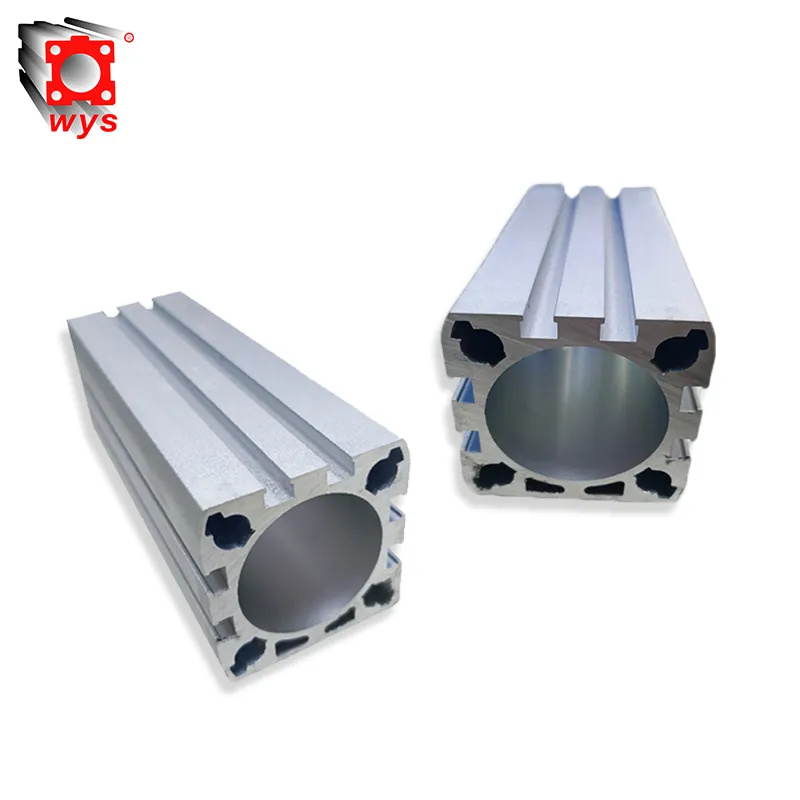
How can we summarize the differences between single-acting and double-acting pneumatic cylinder tubes from a principle perspective?
From a purely principle and structural perspective, the core differences between the two can be summarized as follows:
• The number of directions in which the pneumatic cylinder barrel participates in the pressure action differs.
• The functional division of the internal cavities of the pneumatic cylinder barrel differs.
• The way and frequency of pressure resistance in the pneumatic cylinder barrel differs.
• The requirements for sealing and internal wall consistency in the pneumatic cylinder barrel differ.
However, regardless of whether it is a single-acting or double-acting structure, the pneumatic cylinder barrel is always the fundamental carrier for the cylinder to achieve motion.
How long has your company been in the pneumatic industry?
Founded in 2007, Foshan Weiyingjia Technology Co., Ltd. has over 15 years of experience in producing aluminum alloy pneumatic cylinders. Our company emphasizes high-quality manufacturing, advanced technology, and strict quality control. By purchasing from us, customers gain access to reliable products with excellent precision and durability, making our factory a leading supplier and manufacturer in the global pneumatic industry.