
In pneumatic systems, the fit between the pneumatic cylinder barrel and the piston is a key factor determining the cylinder's performance stability and lifespan. Many seemingly minor dimensional parameters actually have a profound impact on the pneumatic cylinder barrel's operation.
Among these, the "fitting clearance" is particularly important, directly affecting sealing performance, motion resistance, and overall efficiency.
So, what is the appropriate fitting clearance between the pneumatic cylinder tube and the piston? Is a smaller clearance always better, or is a reasonable amount of space necessary? Are there differences under different operating conditions?
This article will systematically analyze these questions, exploring them in depth from the perspectives of structural principles, influencing factors, and performance relationships.
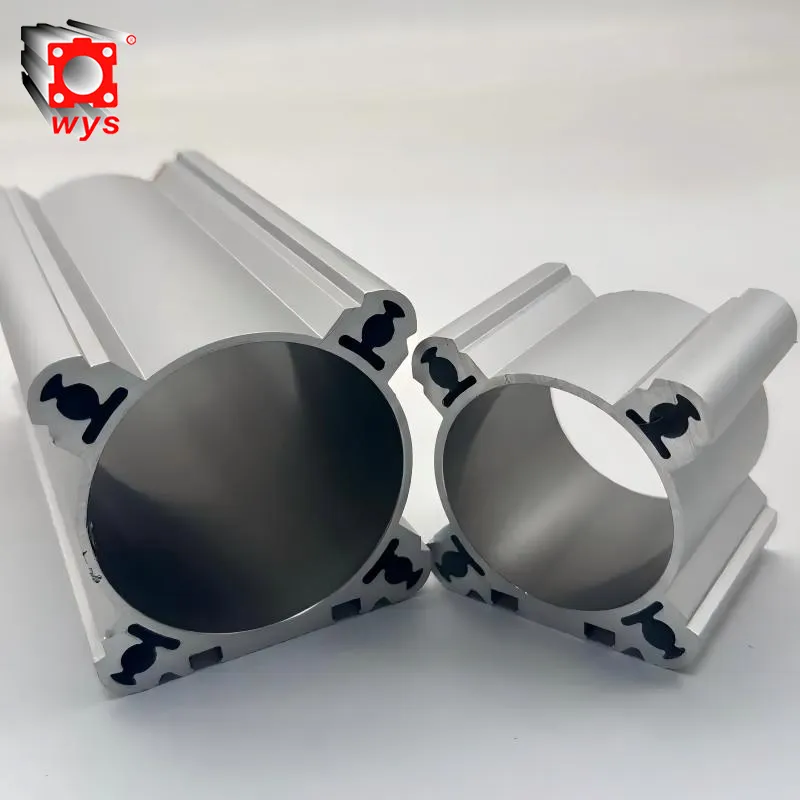
What is the fitting clearance between the pneumatic cylinder barrel and the piston?
In a pneumatic cylinder structure, the piston needs to reciprocate inside the pneumatic cylinder barrel, and a completely "zero-clearance" contact between the two is impossible. The fitting clearance refers to:
The dimensional difference between the piston's outer diameter and the pneumatic cylinder barrel's inner diameter.
This clearance, typically measured in micrometers or millimeters, is essential for:
• Providing space for movement
• Preventing jamming
• Ensuring a seal with the appropriate components
Therefore, the clearance between the pneumatic cylinder barrel and the piston is not an error, but a design parameter requiring precise control.
Why can't the clearance between the pneumatic cylinder tube and the piston be too small?
Will it increase friction?
If the clearance between the pneumatic cylinder barrel and the piston is too small, the contact will be tighter, leading to:
• Significantly increased friction
• Increased resistance to movement
• Increased temperature rise
In this case, the pneumatic cylinder barrel will operate unevenly, and may even jam.
Is jamming likely?
When the clearance is too small and there are machining errors or installation deviations, the piston may experience localized contact within the pneumatic cylinder tube, leading to:
• Uneven wear
• Seizing
This risk is further increased, especially under varying loads or temperatures.
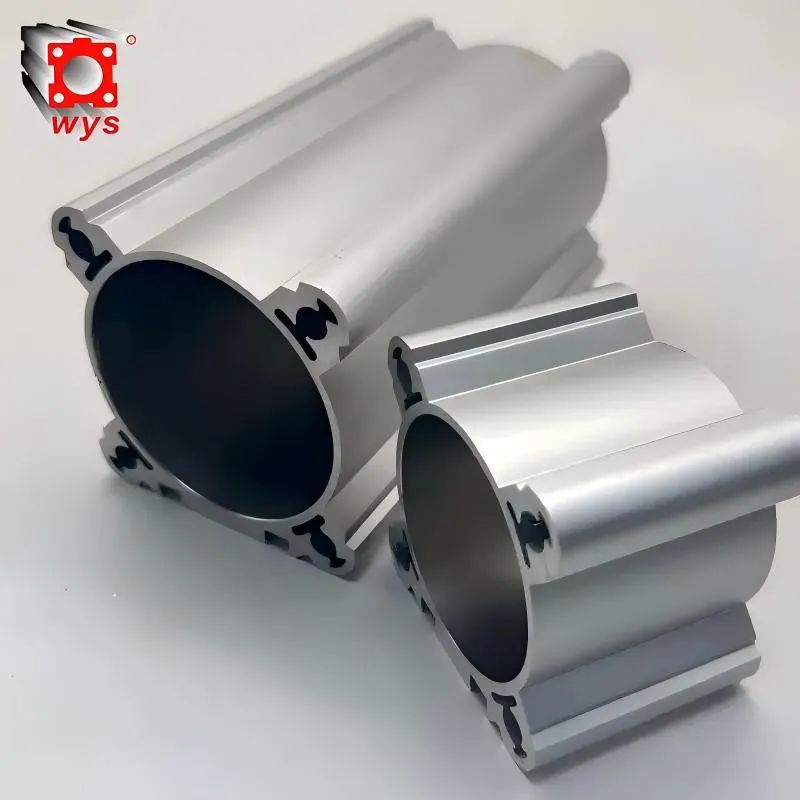
What problems arise from excessive clearance between the pneumatic cylinder tube and the piston?
Will it affect sealing performance?
The sealing of a pneumatic cylinder barrel primarily relies on the sealing element. However, excessive clearance puts additional pressure on the sealing system:
• Increased deformation of the sealing element
• Unstable seal contact
• Increased risk of leakage
This directly impacts the operating efficiency of the pneumatic cylinder tube.
Will it reduce motion accuracy?
A larger clearance causes the piston to wobble within the pneumatic cylinder tube, resulting in:
• Unstable motion trajectory
• Decreased repeatability
• Increased operating noise
This effect is particularly pronounced for equipment requiring precise control.
What is a reasonable clearance between the pneumatic cylinder barrel and the piston?
While specific values may vary depending on the design, from a conventional mechanical design perspective, the clearance between the pneumatic cylinder barrel and the piston generally follows these principles:
• Small-diameter cylinders: smaller clearance
• Large-diameter cylinders: appropriately larger clearance
• High-precision applications: more stringent clearance control
Generally, the radial clearance between the pneumatic cylinder barrel and the piston is typically in the range of 0.01mm to 0.05mm (depending on size grade), but the specific value must be determined in conjunction with design standards and operating conditions.
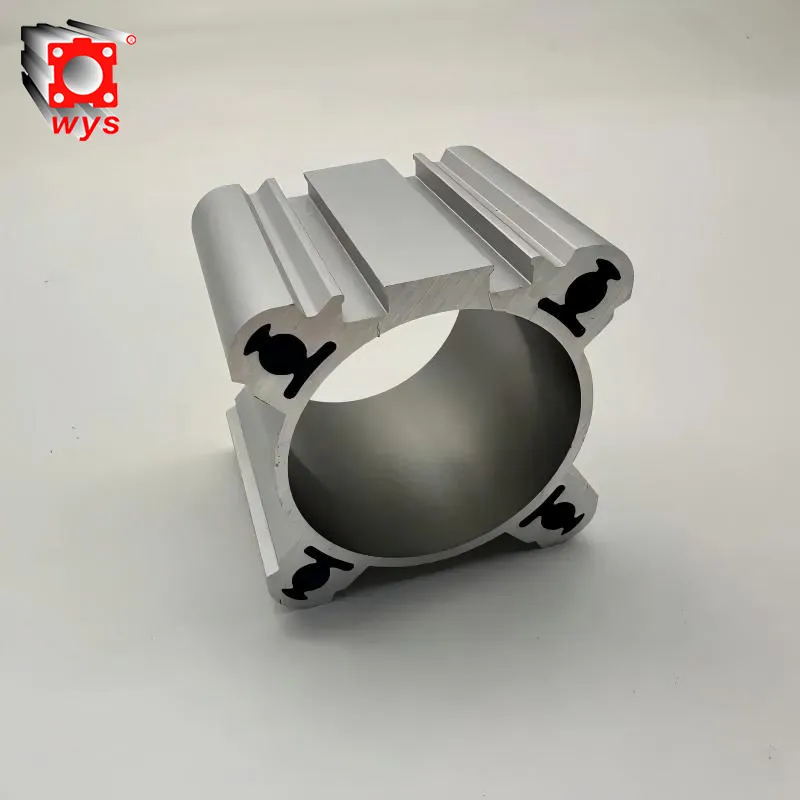
Does the clearance need adjustment under different operating conditions?
Does high-speed operation require special consideration?
Under high-speed operating conditions, the piston within the pneumatic cylinder tube moves at a higher frequency. If the clearance is not appropriate, it can easily lead to:
• Vibration
• Noise
• Increased wear
Therefore, in high-speed operating conditions, the clearance of the pneumatic cylinder tube usually needs more precise control.
Does a low-temperature or high-temperature environment have an impact?
Temperature changes cause thermal expansion and contraction of materials, thus affecting the actual clearance between the pneumatic cylinder barrel and the piston. For example:
• High temperature → Reduced clearance
• Low temperature → Increased clearance
If temperature factors are not considered in the design, it may lead to operational abnormalities.
How much does machining accuracy affect the mating clearance of the pneumatic cylinder tube?
Do dimensional errors change the clearance?
The machining accuracy of the inner diameter of the pneumatic cylinder tube and the outer diameter of the piston directly determine the final clearance. If:
• Roundness error
• Taper error
• Dimensional deviation
all exist, they will cause uneven distribution of the actual clearance, thus affecting operational performance.
Is surface roughness critical?
The surface quality of the inner wall of the pneumatic cylinder tube is equally important. Higher surface roughness will lead to:
• Increased actual contact area
• Increased coefficient of friction
• Fluctuations in sealing effect
Therefore, even with a reasonable clearance design, poor machining quality will affect the overall performance.
What role do seals play in the mating clearance?
Does the seal depend entirely on the clearance?
In fact, the sealing of the pneumatic cylinder barrel is mainly achieved by the seals themselves, not by the clearance itself. Therefore:
• Clearance ensures movement
• Seals prevent leakage
Both work together to form a complete system.
Can seals compensate for clearance deviations?
Within a certain range, seals can adapt to changes in the clearance between the pneumatic cylinder tube and the piston. However, if the clearance is too large or too small, the seals will face:
• Over-compression
• Poor contact
• Increased wear
Therefore, a reasonable clearance remains a prerequisite.
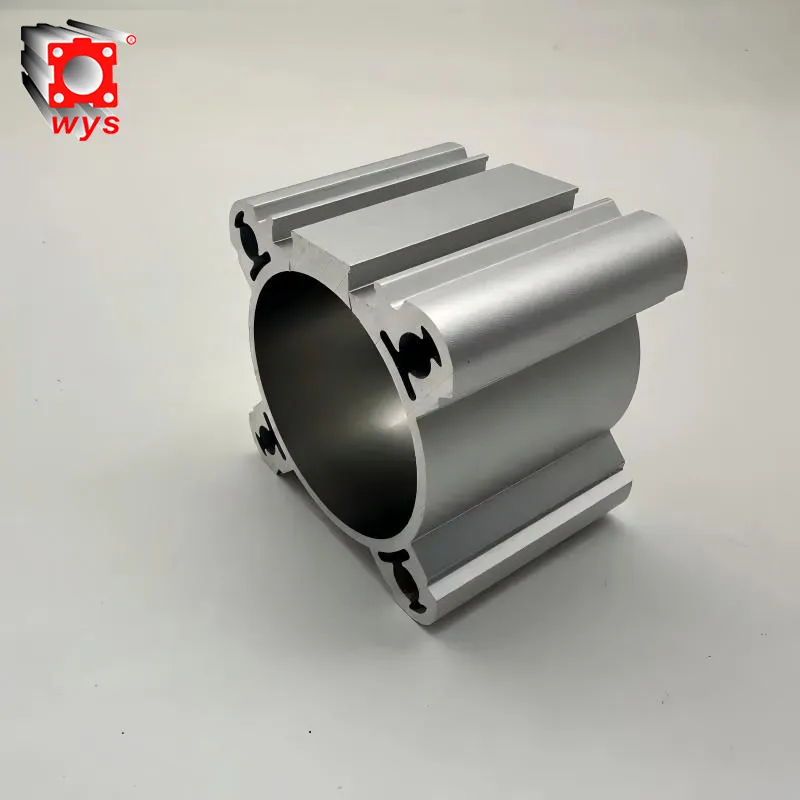
Does lubrication affect the effectiveness of the fit clearance?
Lubrication plays a crucial role in the operation of the pneumatic cylinder barrel. Even with a reasonable clearance design, insufficient lubrication can lead to:
• Increased friction
• Increased temperature rise
• Unstable operation
The lubricating oil film, to some extent, "fills" the clearance, making the actual contact state more stable.
Does installation error alter the fit of the pneumatic cylinder barrel?
During actual assembly, if the pneumatic cylinder barrel and piston do not maintain good coaxiality, it may lead to:
• Reduced local clearance
• Uneven load distribution
• Uneven wear
Even with a reasonable clearance design, installation errors can compromise its effectiveness.
How to comprehensively judge whether the fit clearance of a pneumatic cylinder tube is reasonable?
A preliminary judgment can be made based on the following operational characteristics:
• Smooth operation
• Abnormal noise
• Air leakage
• Stable piston movement
If the pneumatic cylinder tube exhibits abnormal phenomena, it is often related to the fit clearance.
Why is the fit clearance a key parameter in the design of a pneumatic cylinder tube?
The fit clearance between the pneumatic cylinder tube and the piston is actually a balance point of multiple performance indicators:
• Too small a clearance → Friction and jamming problems
• Too large a clearance → Sealing and precision problems
A reasonable clearance can achieve:
• Smooth movement
• Good sealing
• Lower wear
Therefore, the fit clearance is not a single parameter, but a reflection of comprehensive design.
Does Weiyingjia provide high-quality cylinders for wholesale?
Yes. Weiyingjia’s factory produces aluminum alloy pneumatic cylinders, kits, liners, and seal rings with strict quality control. Buyers purchasing from us for wholesale orders receive precision-engineered, durable, and energy-efficient components.
Our brand Weiyingsi has a reputation as a reliable supplier offering competitive prices, professional support, and consistent product quality, making it ideal for companies sourcing pneumatic components for industrial or commercial use.