

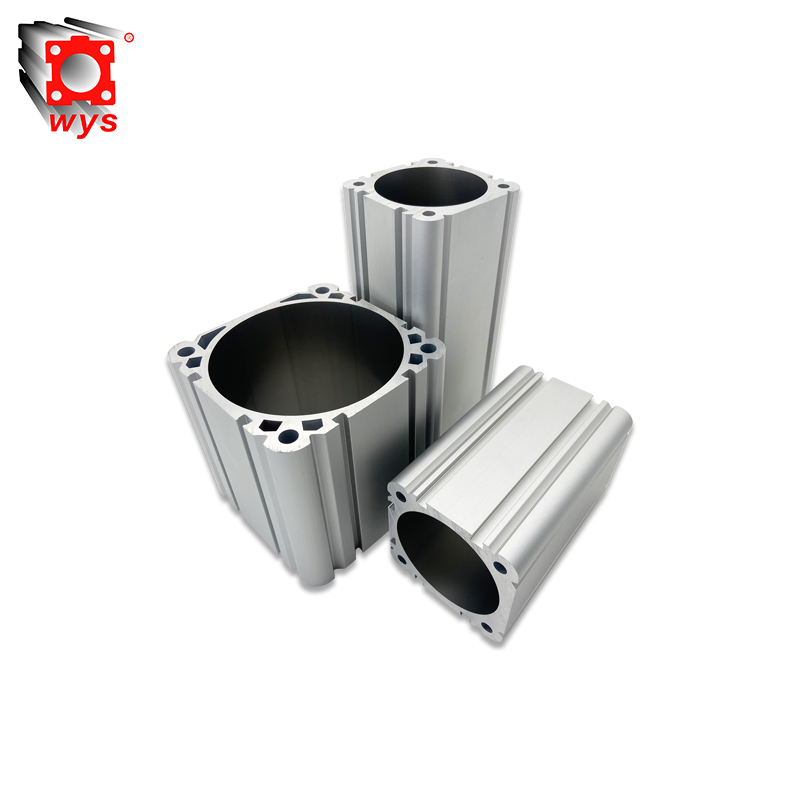
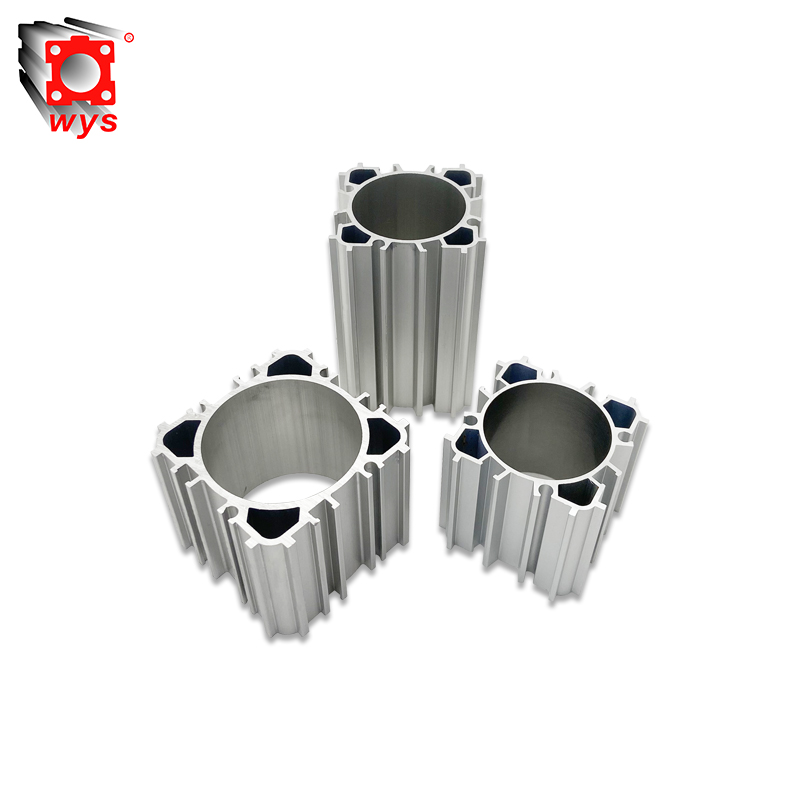
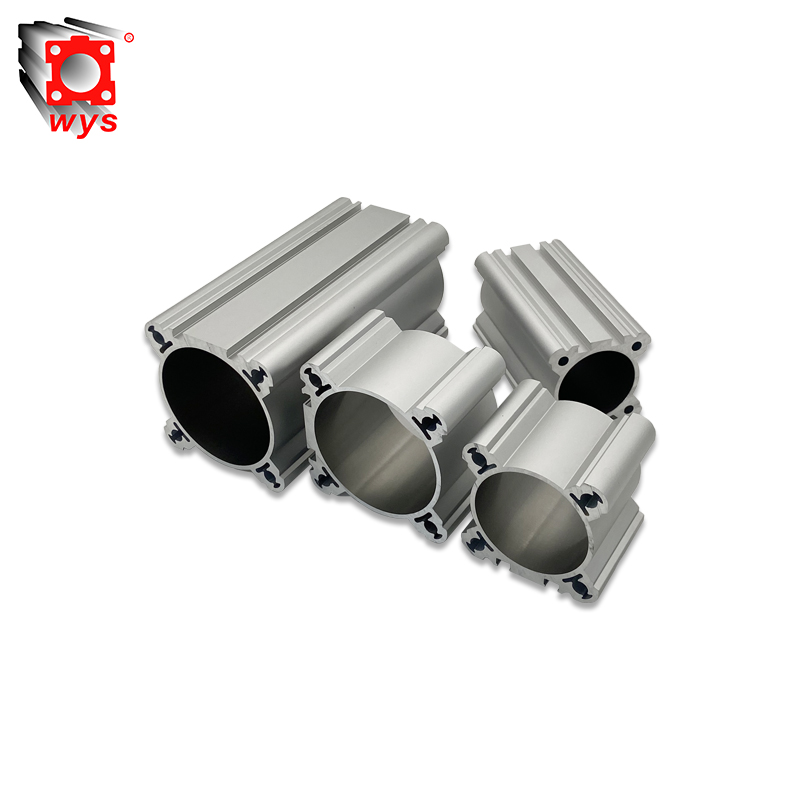
In pneumatic systems, the pneumatic cylinder barrel is not merely a mechanical component carrying piston motion; it is a crucial node for the flow, distribution, and control of compressed air. Especially for double-acting pneumatic cylinder barrels, their port design directly determines whether the cylinder can achieve stable, controllable, and repeatable reciprocating motion.
Therefore, a seemingly basic yet extremely important question is frequently raised: What ports are on a double-acting pneumatic cylinder barrel?
Many people only know that "a double-acting cylinder has two air inlets," but in reality, the pneumatic cylinder barrel itself and its functional extensions involve various port types and applications. A lack of comprehensive understanding can lead to problems in selection, installation, or system design.
This article will rigorously focus on the topic of "What ports are on a double-acting pneumatic cylinder tube?" providing a systematic, professional, and in-depth explanation of the pneumatic cylinder barrel's structure, port types, and functional logic, helping you truly understand the complete port system of a double-acting pneumatic cylinder barrel.
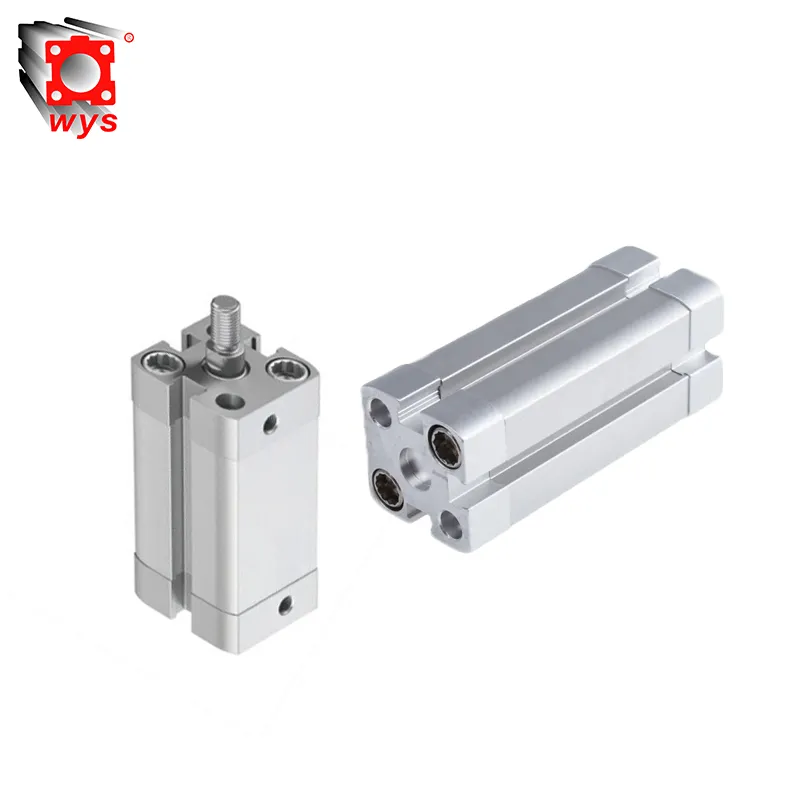
What is a pneumatic cylinder barrel? Why is port design so important?
Before delving into specific port analysis, it's essential to define the pneumatic cylinder barrel and its role within the cylinder.
The pneumatic cylinder barrel is the main structural component of the cylinder, typically a cylindrical metal part used to create a sealed space, allowing compressed air to drive the piston in linear reciprocating motion. All gas entry, exit, and pressure action ultimately occur inside the pneumatic cylinder barrel.
Therefore, the ports on the pneumatic cylinder barrel are essentially the "interface" between compressed air and the cylinder's interior.
The rationality of the port design directly affects the following factors:
• Whether the piston can reciprocate smoothly
• Whether the thrust is stable
• Whether the operating speed is controllable
• Whether the internal pressure is balanced
• Whether the seals are reliable over the long term
For a double-acting pneumatic cylinder barrel, the ports are one of its core distinguishing features from single-acting structures.
What is a double-acting pneumatic cylinder tube?
What is the relationship between the number of ports and its operation?
A double-acting pneumatic cylinder tube is a pneumatic structure where the piston is driven by compressed air in both its extension and retraction directions.
This operating method directly determines a fundamental characteristic of the port design of a double-acting pneumatic cylinder barrel:
A double-acting pneumatic cylinder barrel requires at least two ports for air intake.
These two ports correspond to the air chambers on either side of the piston, and are necessary for bidirectional drive.
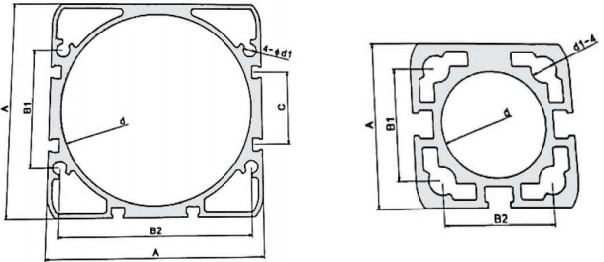
What are the most basic ports of a double-acting pneumatic cylinder barrel?
1. Extended Port (Front Chamber Air Inlet)
This is one of the most basic and important ports on a double-acting pneumatic cylinder barrel.
Main functions of the extended port:
• Introduce compressed air into the front chamber of the pneumatic cylinder barrel
• Push the piston outward
• Achieve the working stroke output
When compressed air enters the pneumatic cylinder barrel through this port, the piston moves forward under air pressure, completing the main actuation action.
Typical Location of the Extended Port:
• Usually located on the pneumatic cylinder tube side near the cylinder head
• Corresponding to the piston rod extension direction
2. Retracted Port (Rear Chamber Inlet)
The retracted port is the key port that distinguishes a double-acting pneumatic cylinder tube from a single-acting one.
Main Functions of the Retracted Port
• Introduces compressed air into the rear chamber of the pneumatic cylinder barrel
• Pushes the piston inward to retract
• Achieves reset or reverse motion
When the system switches air paths, compressed air enters the rear chamber of the pneumatic cylinder tube through the retracted port, and the piston completes the reverse motion under air pressure.
Typical Location of the Retracted Port
• Usually located on the pneumatic cylinder tube side near the piston rod tail
• Arranged symmetrically or correspondingly to the extended port
Why are these two ports considered the "core ports" of a double-acting pneumatic cylinder tube?
The working principle of a double-acting pneumatic cylinder tube relies entirely on the alternating airflow through these two ports:
• Air intake at one port → Air exhaust at the other
• Pressure difference drives piston movement
• Repeated switching achieves reciprocating motion
If either port is missing, the pneumatic cylinder tube cannot achieve true double-acting operation.
Does a double-acting pneumatic cylinder tube only have these two ports?
This is a crucial question.
The answer is: not necessarily.
In a standard sense, a double-acting pneumatic cylinder tube has at least two working ports, but in actual design and application, it may have other functional ports.
Does a double-acting pneumatic cylinder tube have an exhaust port?
From a functional perspective:
In pneumatic systems, exhaust is usually accomplished through a control valve, rather than by directly providing an independent exhaust port on the pneumatic cylinder tube.
However, in some designs, the working ports of a pneumatic cylinder tube inherently function as:
• Intake port
• Exhaust port
That is, when a port is not used as an intake port, it naturally becomes an exhaust port.
Therefore, strictly speaking:
Double-acting pneumatic cylinder tubes do not require an additional independent exhaust port.
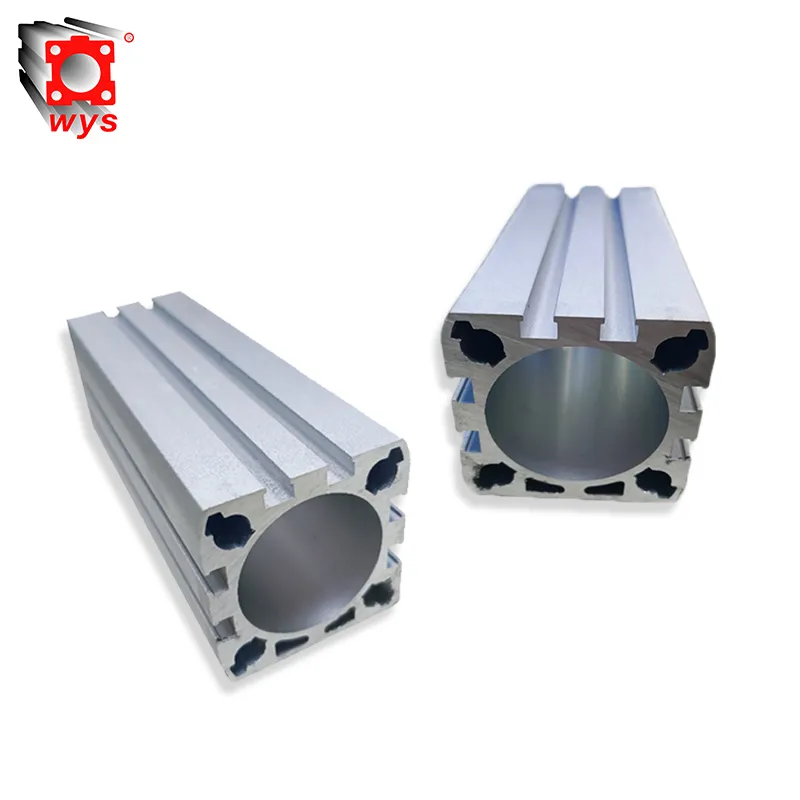
Do double-acting pneumatic cylinder tubes have buffer-related ports?
This is another common question.
The Relationship Between Buffer Structures and Ports
Some double-acting pneumatic cylinder barrels have pneumatic buffer functions to mitigate the impact of the piston at the end of its stroke. In these types of pneumatic cylinder barrels, buffering is usually achieved through internal throttling, rather than by adding a separate external port.
Therefore, it is important to clarify:
• Buffer function ≠ Independent buffer port
• Buffer adjustment is usually accomplished through screws or internal channels.
In most cases, buffering does not increase the number of ports on a pneumatic cylinder barrel.
Do double-acting pneumatic cylinder tubes have sensor-related ports?
Strictly speaking, in the sense of gas flow, the sensor mounting location is not considered a "gas port."
However, in the structural design, some pneumatic cylinder tubes will have reserved:
• Magnetic switch mounting slots
• Position detection holes
These structures are used to mount sensors and are not directly connected to the compressed air passage, therefore they should not be confused with pneumatic ports.
Is the number of ports on a double-acting pneumatic cylinder barrel fixed?
From a principle perspective:
• Minimum number of ports: 2 (extended port + retracted port)
• This is a necessary condition for a double-acting pneumatic cylinder barrel to function.
From a practical design perspective:
• The number of ports may vary slightly depending on the structural form
• But it will not be less than two working ports.
Does the position of the pneumatic cylinder barrel ports affect performance?
The answer is yes.
The impact of port position on the pneumatic cylinder barrel includes:
• Intake efficiency
• Exhaust smoothness
• Piston start-up response
• Speed stability
A reasonable port layout can make the airflow inside the pneumatic cylinder barrel smoother, reduce pressure loss, and improve overall operational stability.
What are the common structural forms of ports on a double-acting pneumatic cylinder barrel?
Structurally, common port designs for pneumatic cylinder barrels include:
• Side ports
• End cap ports
• Symmetrically distributed ports
The choice of these designs is primarily related to the installation method, space constraints, and airflow layout of the pneumatic cylinder tube, rather than altering its fundamental working principle.
Why is a correct understanding of pneumatic cylinder barrel ports so important?
Many pneumatic system problems do not stem from the quality of the pneumatic cylinder barrel itself, but rather from:
• Misunderstanding of ports
• Inappropriate airflow connections
• Confusion about port functions
A correct understanding of the ports on a double-acting pneumatic cylinder barrel helps to:
• Correctly design airflow paths
• Avoid incorrect connections
• Improve system reliability
• Extend the lifespan of the pneumatic cylinder barrel
What are some common misconceptions about double-acting pneumatic cylinder barrel ports?
Misconception 1: A double-acting pneumatic cylinder barrel has only one air inlet.
This is a misuse of the concept of a single-acting pneumatic cylinder barrel.
Misconception 2: More ports mean more functionality.
The number of ports is not simply positively correlated with functionality.
Myth 3: Exhaust must be completed through a separate port.
In fact, in most cases, exhaust is achieved through the same working port.
What ports are on a double-acting pneumatic cylinder barrel?
Finally, to answer the title question concisely and accurately:
• A double-acting pneumatic cylinder barrel has at least two ports.
• Corresponding to the piston's front and rear chambers respectively.
• One is used to push the piston out.
• One is used to push the piston back.
• Under different operating conditions, these ports simultaneously perform intake and exhaust functions.
Understanding this is fundamental to the correct use and design of pneumatic systems.
What products does Weiyingjia offer for wholesale buyers?
Weiyingjia provides a wide range of pneumatic components including cylinder barrels, cylinder kits, liners, seal rings, and other pneumatic accessories. As a manufacturer with 16 years of expertise, we focus on high-quality production, rigorous testing, and low-energy consumption designs. Buyers seeking wholesale or bulk orders can rely on our factory for consistent product quality, reasonable prices, and professional sales support. Our brand, Weiyingsi, ensures reliability in both domestic and international markets.