

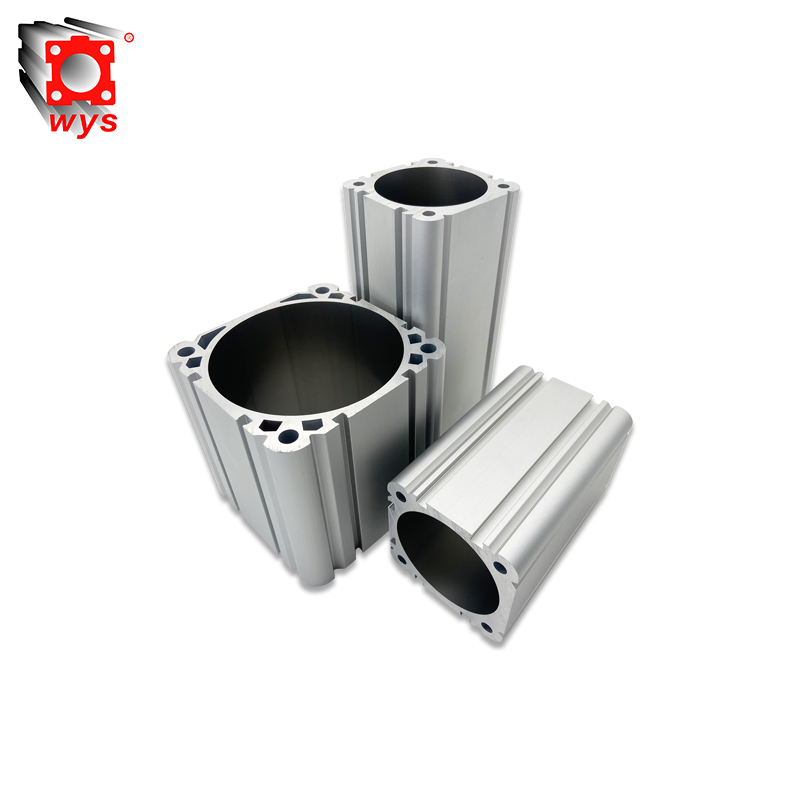
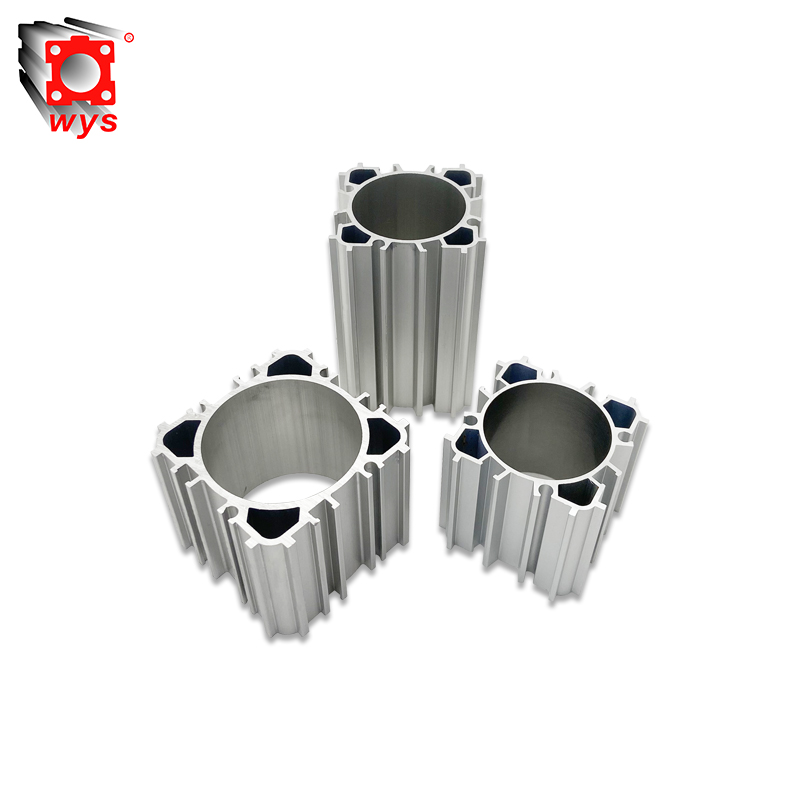
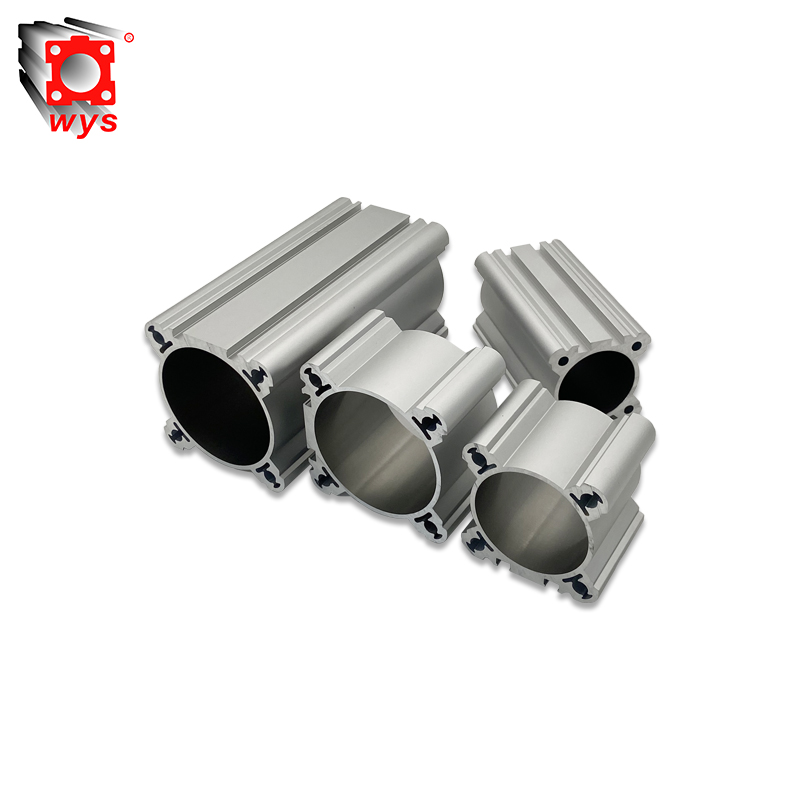
In pneumatic systems, the pneumatic cylinder barrel is one of the key components determining cylinder performance, stability, and service life.
With the increasing level of industrial automation, double-acting cylinders are widely used, making the double-acting pneumatic cylinder tube a key focus in engineering design and equipment selection.
So, what are the advantages of a double-acting pneumatic cylinder barrel? And what are its significant disadvantages?
This article will provide a systematic and professional analysis of the double-acting pneumatic cylinder barrel, helping you fully understand its advantages and limitations.
What is a double-acting pneumatic cylinder barrel?
The pneumatic cylinder barrel is the main structure of the cylinder, providing a sealed, linear motion space for the piston and seals. The term "double-acting" means that the cylinder relies on compressed air to complete its movement in both the extension and return directions.
Therefore, a double-acting pneumatic cylinder barrel must possess the following characteristics:
• Ability to withstand bidirectional air pressure
• High inner wall precision and smoothness
• Stable sealing structure
• Ability to withstand the friction and pressure generated by reciprocating motion over long periods
Compared to single-acting structures, double-acting pneumatic cylinder barrels have higher requirements for materials, machining precision, and surface treatment.
What are the core working characteristics of a double-acting pneumatic cylinder barrel?
Understanding the advantages and disadvantages of a double-acting pneumatic cylinder barrel requires analyzing its working characteristics.
During operation, a double-acting pneumatic cylinder barrel:
• Forward motion: Compressed air enters one side of the cylinder, pushing the piston forward.
• Reverse motion: Air enters from the other side, pushing the piston back.
Throughout the entire process, the pneumatic cylinder barrel is always under stress, which places higher demands on the structural strength, wear resistance, and sealing stability of the cylinder.
It is precisely this "bidirectional drive" characteristic that determines that a double-acting pneumatic cylinder barrel possesses significant advantages but also inevitably has certain disadvantages.
What are the main advantages of a double-acting pneumatic cylinder tube?
1. Stable Bidirectional Drive Force, More Precise Motion Control
One of the biggest advantages of the double-acting pneumatic cylinder tube is that both extension and return strokes are directly driven by pneumatic pressure.
Compared to structures relying on spring return, the double-acting pneumatic cylinder tube offers the following advantages:
• More stable thrust in both directions
• Easier speed adjustment
• More controllable end-stroke impact
For equipment requiring precise reciprocating motion, the bidirectional controllable characteristics of the pneumatic cylinder barrel significantly improve overall operational stability.
2. Suitable for Long Strokes and High-Frequency Reciprocating Conditions
In practical applications, many conditions require:
• Long strokes
• High reciprocating frequency
• Long continuous operating time
The double-acting pneumatic cylinder tube has a clear advantage under these conditions. Because the return stroke does not rely on a spring, the internal forces of the pneumatic cylinder barrel are more balanced, avoiding performance degradation caused by spring fatigue.
This allows the double-acting pneumatic cylinder tube to exhibit more stable performance output under high cycle count conditions.
3. Wider Thrust Output Range
The double-acting pneumatic cylinder tube provides effective thrust in both directions, therefore:
• Withstands more complex load variations
• Is better suited for bidirectional mechanical structures
• Is more reliable in vertical or inclined installations
In design, as long as the effective pressure area is calculated properly, the pneumatic cylinder tube can achieve predictable and repeatable thrust output, which is especially important in automated systems.
4. Fewer Restrictions on Installation Direction
Because it does not rely on springs or gravity for reset, the double-acting pneumatic cylinder barrel, when installed,
• Is stable in horizontal installation
• Is equally reliable in vertical installation
• Does not affect the return stroke when installed at an incline
This allows for greater freedom in the structural layout of the pneumatic cylinder barrel, which is beneficial for compact equipment design.
5. More Uniform Wear on the Inner Wall of the Pneumatic Cylinder Barrel
In a double-acting structure, the piston is pushed by air pressure in both directions, resulting in a relatively uniform friction distribution. As long as the inner wall of the pneumatic cylinder barrel is machined to a satisfactory quality and lubrication is adequate, the risk of localized abnormal wear is significantly reduced.
This is one of the key reasons why double-acting pneumatic cylinder barrels are widely used in high-end equipment.
Is a double-acting pneumatic cylinder tube always better than a single-acting one?
While double-acting pneumatic cylinder tubes offer many advantages, they are not the optimal choice in all scenarios.
Whether they are "better" depends on the following factors:
• Whether bidirectional control of operation is required
• Energy consumption sensitivity
• Acceptable system complexity
• Adequacy of maintenance conditions
Therefore, understanding the disadvantages of double-acting pneumatic cylinder tubes is equally important.
What are the main disadvantages of double-acting pneumatic cylinder tubes?
1. More complex gas path system
Double-acting pneumatic cylinder barrels require:
• Two air inlets
• More gas pipe connections
• More complex valve control logic
This means that the entire system will have:
• More potential leak points
• Increased installation and commissioning difficulty
• More stringent piping requirements
For simple, cost-sensitive equipment, this can be a significant burden.
2. Relatively High Air Consumption
Since both extension and return strokes require compressed air, the double-acting pneumatic cylinder barrel typically has higher air consumption and energy consumption per unit time than a single-acting structure.
• Air consumption
• Energy consumption
Under prolonged operation or high-frequency operation, the operating cost of a pneumatic cylinder tube will increase accordingly.
3. Higher Requirements for Sealing Performance
A double-acting pneumatic cylinder tube has more sealing surfaces internally:
• Piston seal
• End cap seal
• Interface seal
Deterioration in sealing performance can lead to:
• Insufficient thrust
• Unstable movement
• Wasted air supply
Therefore, pneumatic cylinder barrels are more dependent on the quality of sealing materials and assembly precision.
4. Higher Manufacturing and Maintenance Costs
Compared to single-acting structures, double-acting pneumatic cylinder tubes typically require:
• Higher precision internal bore machining
• More stringent coaxiality control
• More complex inspection processes
This is directly reflected in the cost. Furthermore, the frequency of seal replacement and air circuit inspection may be higher during maintenance.
5. More Professional Design and Selection Requirements
When selecting a double-acting pneumatic cylinder tube, the following factors need to be considered comprehensively:
• Cylinder diameter and thrust calculations
• Piston rod stress conditions
• Buffering method
• Operating pressure range
If the selection is inappropriate, the advantages of a pneumatic cylinder tube will not only be ineffective, but may also cause system problems.
In which situations are the disadvantages of a double-acting pneumatic cylinder barrel more pronounced?
The disadvantages of a double-acting pneumatic cylinder barrel are usually more prominent under the following conditions:
• Simple mechanisms with low requirements for air source stability
• Applications with extremely high cost sensitivity
• Situations requiring only unidirectional output force
• Structures with limited space but difficult air path layout
In these situations, blindly using a double-acting pneumatic cylinder tube may actually reduce the overall system efficiency.
How to rationally view the advantages and disadvantages of a double-acting pneumatic cylinder tube?
From an engineering perspective, a pneumatic cylinder tube itself is not absolutely "good" or "bad," but rather whether it is suitable for a specific need.
The core value of a double-acting pneumatic cylinder tube lies in:
• Providing controllable and stable bidirectional power
• Supporting high-frequency, high-precision reciprocating motion
However, its main drawbacks are:
• System complexity
• Energy consumption and cost
Only after fully understanding these advantages and disadvantages can a rational choice be made regarding pneumatic cylinder barrels.
What are the advantages and disadvantages of a double-acting pneumatic cylinder barrel?
Double-acting pneumatic cylinder barrels have the following significant advantages:
• Bidirectional drive, high control precision
• Adaptability to complex loads and high-frequency operation
• Flexible installation direction
• Stable thrust output
At the same time, there are also significant disadvantages:
• More complex air circuit structure
• Higher air consumption
• High requirements for sealing and machining precision
• Relatively increased cost and maintenance pressure
Only when system requirements, operating conditions, and cost boundaries are clearly defined can the advantages of pneumatic cylinder tubes truly translate into improved equipment performance.
Why choose Weiyingjia as your pneumatic cylinder supplier?
Founded in 2007, Weiyingjia is a professional manufacturer specializing in aluminum alloy pneumatic cylinder barrels, kits, liners, and seals. With over 15 years of experience, our factory spans 10,000 square meters and operates six production lines. We have 100+ skilled technicians and strict quality inspection teams. By purchasing from Weiyingjia, you get high-quality, durable, and precision-engineered pneumatic components at competitive prices, making us a trusted supplier for wholesale and custom orders.