

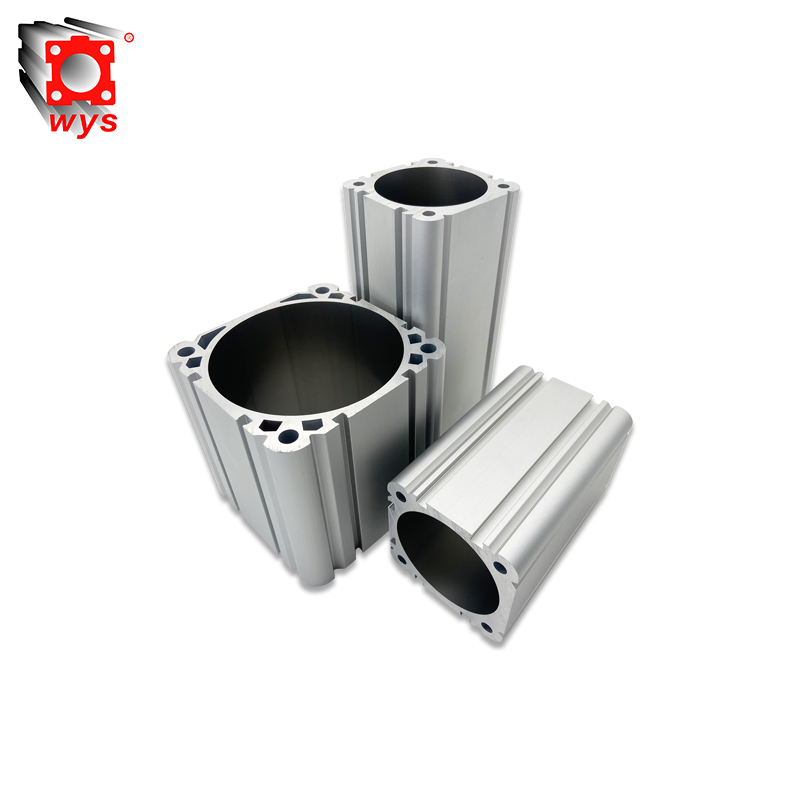
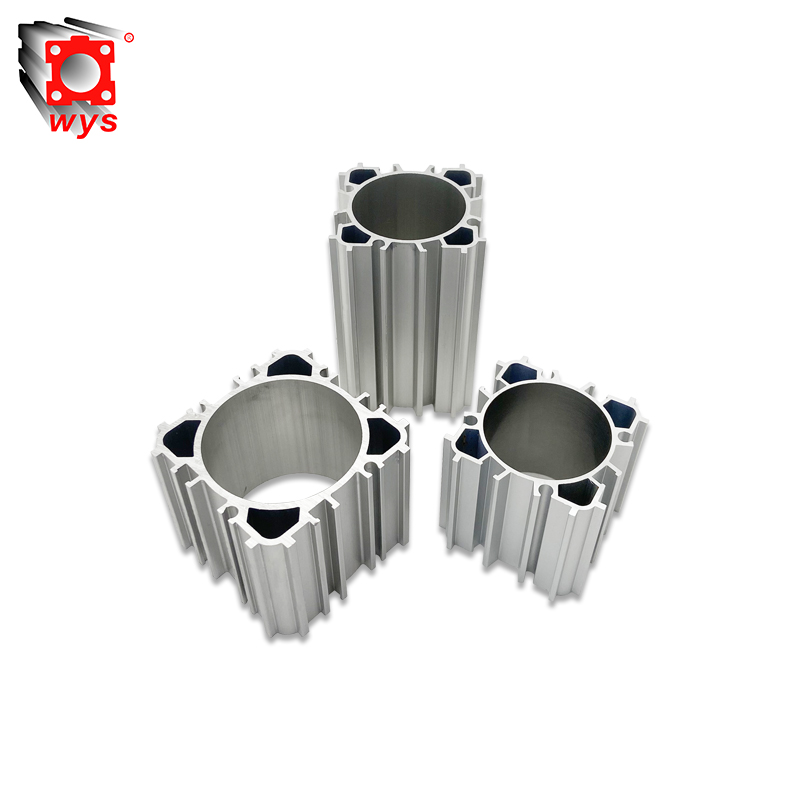
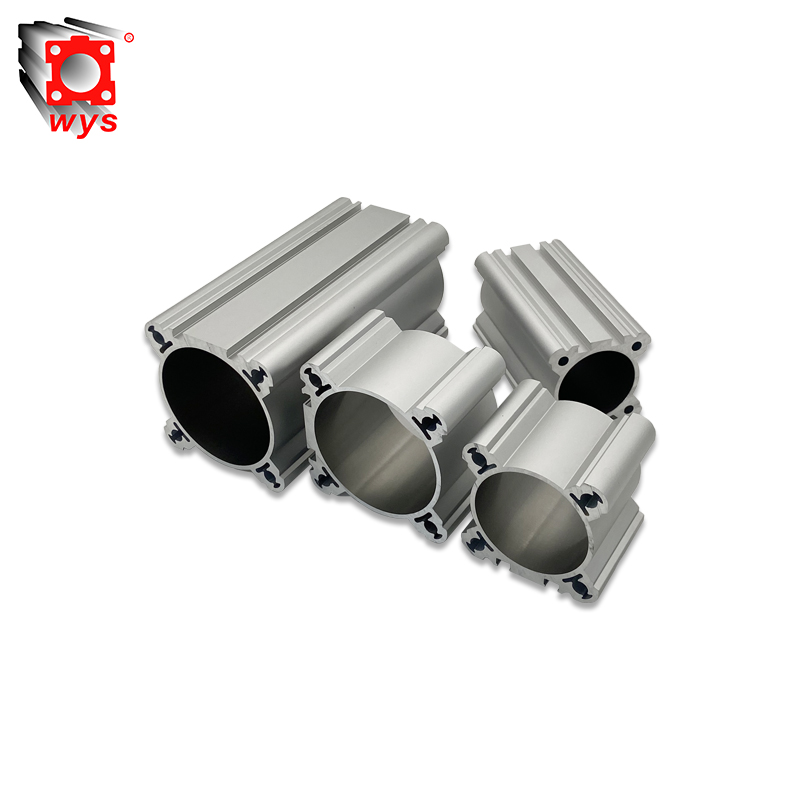
In the design and application of pneumatic systems, the structure of the cylinder directly affects the equipment's motion, control accuracy, and operational stability. Among the many types of cylinders, the double-acting pneumatic cylinder consistently holds a very important position.
Many people, when first encountering pneumatic systems, have questions:
Since a single-acting structure can already achieve motion, why use a double-acting pneumatic cylinder?
Who "must" use a double-acting pneumatic cylinder?
To answer these questions, we must start from the basic principles of the pneumatic cylinder's working logic, force application, and control requirements to truly understand the significance of the double-acting pneumatic cylinder.
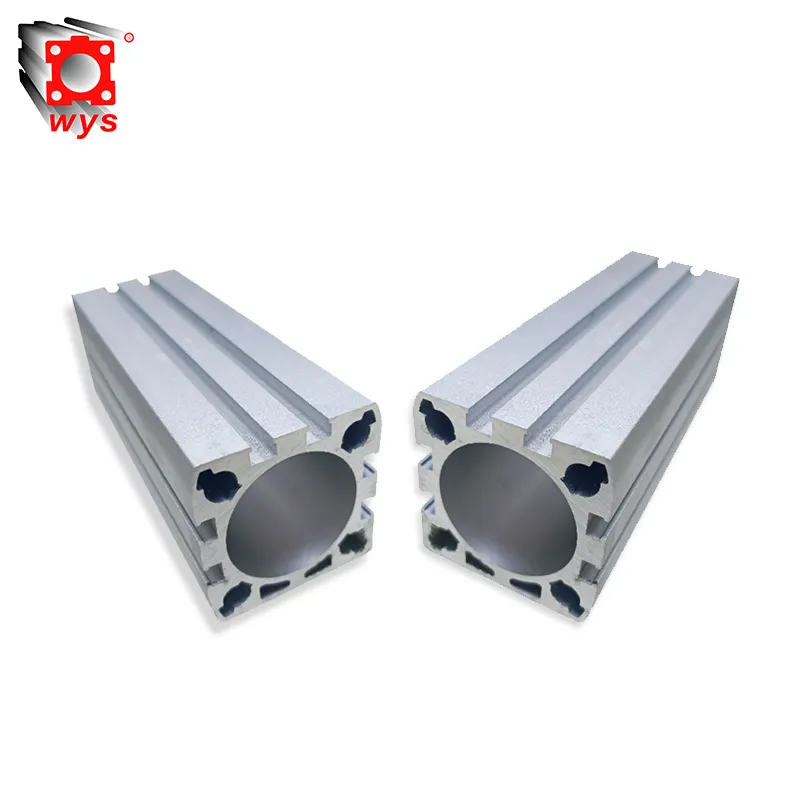
What is a Double-Acting Pneumatic Cylinder?
Basic Definition of a Double-Acting Pneumatic Cylinder
A double-acting pneumatic cylinder is a cylinder where compressed air can be alternately introduced to both sides, thus directly driving the piston movement in both the extension and retraction directions.
This means:
• The cylinder is divided into two effective working chambers by the piston.
• Compressed air can act in both directions.
• Both the forward and return movements of the piston are controllable.
From a structural and functional perspective, the double-acting pneumatic cylinder is a "fully controlled stroke" type of pneumatic cylinder.
Why Can't Single-Acting Structures Meet All Needs?
To understand why double-acting pneumatic cylinders are used, we must first understand the inherent limitations of single-acting structures.
What are the working limitations of a single-acting pneumatic cylinder?
Single-acting pneumatic cylinders typically have the following characteristics:
• Only one direction is driven by compressed air.
• Retraction relies on spring force or external mechanical force.
• The cylinder does not participate in pneumatic drive during the retraction phase.
This means that single-acting pneumatic cylinders have limitations in the following areas:
• Retraction speed and force are difficult to control precisely.
• The consistency of the motion process is greatly affected by external forces.
• They are not suitable for applications requiring stable bidirectional force output.
It is these limitations that prevent single-acting pneumatic cylinders from covering all industrial and equipment needs.
What key problems can be solved by using a double-acting pneumatic cylinder?
Why can a double-acting pneumatic cylinder achieve bidirectional controlled motion?
The biggest advantage of a double-acting pneumatic cylinder lies in its bidirectionally controlled operation.
In a double-acting structure:
• The pneumatic cylinder barrel is pressurized during the extension stroke, pushing the piston.
• During the return stroke, it is also driven by compressed air.
• The speed, force, and rhythm of movement in both directions can be adjusted through the pneumatic circuit.
Therefore, a double-acting pneumatic cylinder barrel provides higher motion consistency and control precision.
Why is a double-acting pneumatic cylinder barrel more suitable for continuous reciprocating work?
In systems requiring frequent reciprocating motion:
• The spring in a single-acting pneumatic cylinder barrel is repeatedly compressed and released.
• The elastic element is prone to fatigue.
• The return process is significantly affected by external conditions.
In a double-acting pneumatic cylinder barrel:
• The pneumatic cylinder barrel is continuously involved in bearing pressure throughout the entire cycle.
• The piston is stably driven by air pressure in both directions.
• The motion rhythm is more uniform.
This makes the double-acting pneumatic cylinder barrel easier to maintain a long-term stable operating state under continuous working conditions.
From the perspective of the pneumatic cylinder tube, what are the essential advantages of the double-acting structure?
What role does the pneumatic cylinder tube play in a double-acting structure?
In a double-acting cylinder, the pneumatic cylinder tube is not a passive container, but a core structure that continuously participates in the work:
• The inner walls on both sides alternately bear air pressure.
• The sealing system functions in both forward and reverse directions.
• The condition of the inner wall of the pneumatic cylinder tube directly affects the quality of bidirectional movement.
This gives the double-acting pneumatic cylinder tube a higher "participation" and "control value" in the system.
Why is a double-acting pneumatic cylinder tube more conducive to motion stability?
Because the double-acting pneumatic cylinder tube is always in a controlled state throughout the entire stroke:
• The piston does not rely on elastic elements for return.
• Pressure changes within the pneumatic cylinder tube are more predictable.
• Shocks and fluctuations during movement are easier to control.
From an engineering perspective, a double-acting pneumatic cylinder tube is more conducive to achieving stable and repeatable motion behavior.
Who needs to use a double-acting pneumatic cylinder barrel?
Which systems have a clear need for bidirectional output force? Systems with specific requirements for the following characteristics typically require a double-acting pneumatic cylinder barrel:
• Effective output force is required for both extension and retraction.
• Retraction should not rely on springs or external loads.
• Consistent motion is desired in both directions.
Under these requirements, a double-acting pneumatic cylinder barrel is almost the only reasonable choice.
Which users are more concerned with motion control and consistency?
For user groups that prioritize the following factors, a double-acting pneumatic cylinder barrel is particularly important:
• Stability of the motion cycle
• Adjustability during the stroke
• Consistent performance in repetitive actions
Because the pneumatic cylinder barrel plays a dominant role in the double-acting structure, these users tend to choose a double-acting pneumatic cylinder barrel as the basis for their actuator structure.
What are the advantages of a double-acting pneumatic cylinder tube in terms of control logic?
How does pneumatic control depend on the pneumatic cylinder tube structure?
In pneumatic systems, control is essentially the management of pressure, flow, and direction.
The double-acting pneumatic cylinder tube provides more complete conditions for the control system:
• Intake and exhaust can be independently adjusted in both directions.
• Internal pressure changes in the pneumatic cylinder tube are more predictable.
• Control strategies are easier to standardize.
In contrast, a single-acting pneumatic cylinder barrel lacks pneumatic control space during the retraction phase.
Why is a double-acting pneumatic cylinder barrel more conducive to fine adjustment?
Because the double-acting pneumatic cylinder barrel participates in pneumatic action during both forward and reverse strokes:
• Speed adjustment is more flexible.
• Buffering and damping are easier to achieve.
• The response throughout the entire stroke is more linear.
From a system control perspective, the double-acting pneumatic cylinder barrel provides more "operating space" for adjustment.
Does using a double-acting pneumatic cylinder tube imply higher requirements?
Does a double-acting pneumatic cylinder tube require higher quality?
The answer is yes.
Because the double-acting pneumatic cylinder barrel throughout its entire working cycle:
• The inner wall is always involved in dynamic sealing.
• It withstands bidirectional, repeated pressure changes.
• It is more sensitive to dimensional consistency and surface quality.
Therefore, double-acting pneumatic cylinder barrels usually require higher standards for materials, machining accuracy, and surface treatment.
Why is a high-quality pneumatic cylinder tube particularly important for double-acting structures?
In a double-acting system:
• Any abnormality in the inner wall condition of either side will affect overall performance.
• Unstable sealing will amplify the impact in both directions.
• The pneumatic cylinder tube becomes a critical factor in determining system reliability.
This is why, in demanding systems, the quality of the pneumatic cylinder tube is often more crucial than the control components themselves.
Why use a double-acting pneumatic cylinder tube?
Based on the above analysis, we can summarize this question from a fundamental perspective:
• Double-acting pneumatic cylinder tubes enable bidirectional pneumatic drive.
• The pneumatic cylinder tube is always engaged throughout the entire stroke.
• Bidirectional movement is more controllable, stable, and consistent.
• The control logic is more complete, and there is greater adjustment flexibility.
Therefore, when a system demands higher requirements for motion quality, controllability, and stability, using a double-acting pneumatic cylinder barrel becomes almost a necessity.
How can I purchase pneumatic components from your company?
Customers can buy high-quality pneumatic cylinder barrels, kits, and related components directly from Foshan Weiyingjia Technology Co., Ltd. Our factory supports both wholesale and retail orders, providing competitive prices and reliable supply.
As a professional manufacturer, we ensure all products meet strict quality standards, offering long-lasting and precise solutions. Purchasing from our brand Weiyingsi guarantees satisfaction and consistency for any industrial application.