

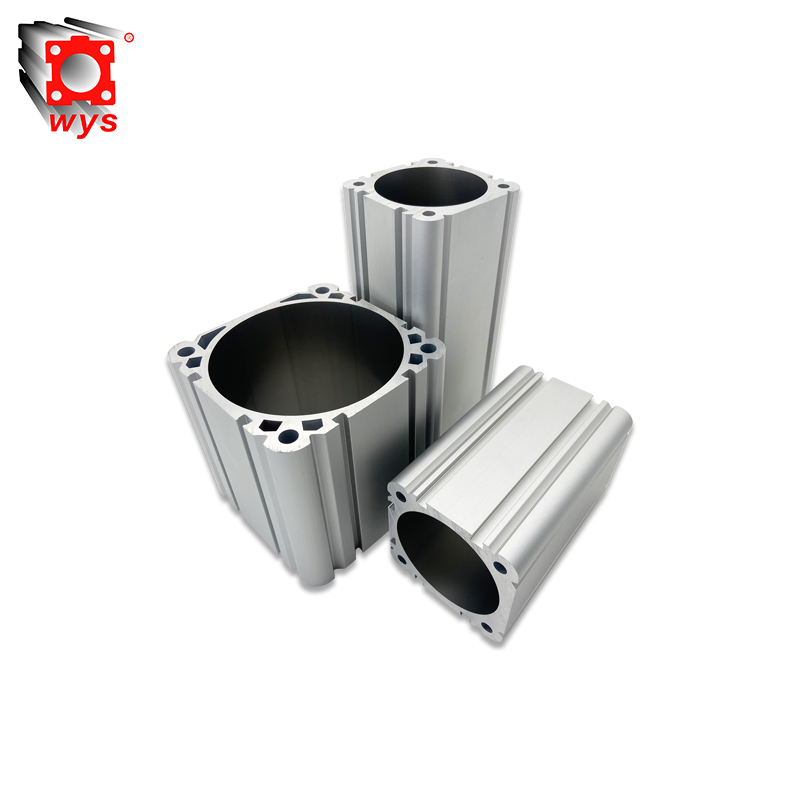
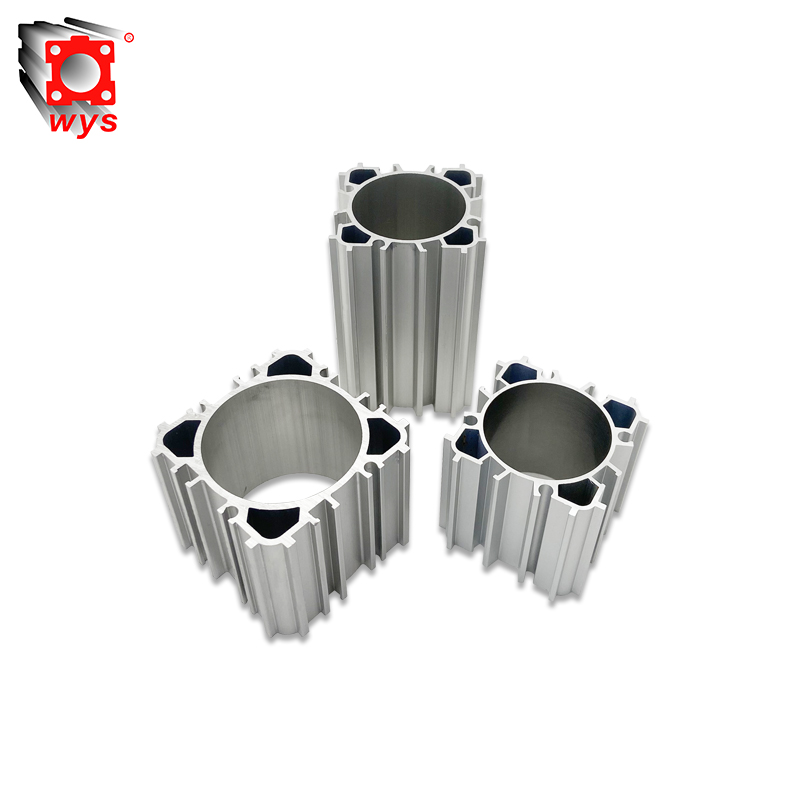
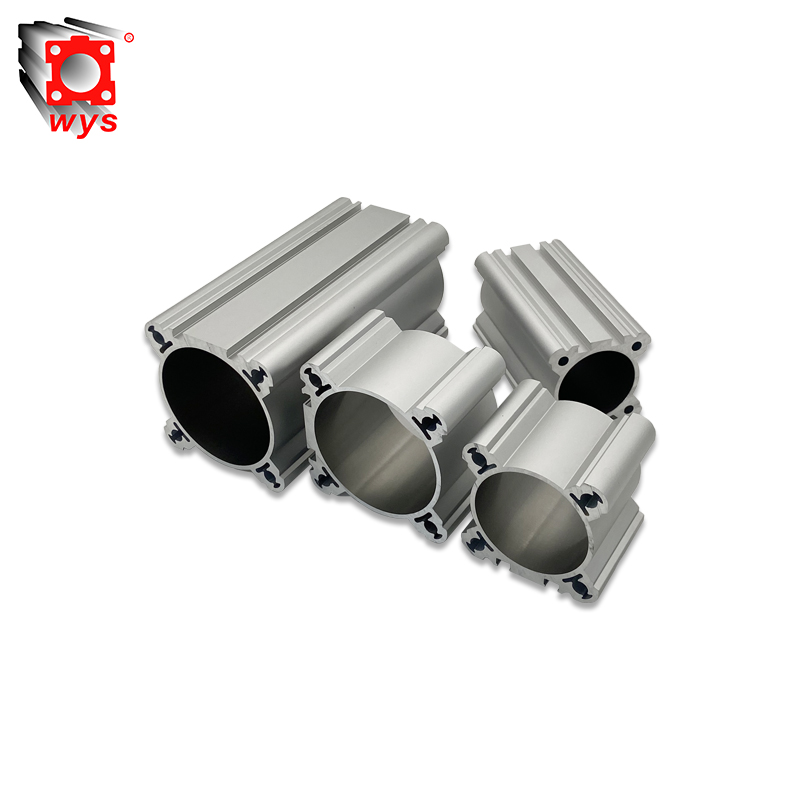
In pneumatic systems, the cylinder is the core actuator that converts compressed air energy into mechanical motion. Among the various components of a cylinder, the pneumatic cylinder barrel is one of the most fundamental and critical structures.
Many people know that cylinders "move," but they don't understand that the working environment created by the pneumatic cylinder barrel is what truly determines how the cylinder moves and why it can stably output force.
So, what exactly is the working principle of a pneumatic cylinder barrel?
How does it work with compressed air, the piston, and the sealing system to complete reciprocating motion?
What irreplaceable roles does the pneumatic cylinder barrel play in the entire cylinder operation process?
This article will systematically and in-depth analyze the working principle of the pneumatic cylinder barrel from a professional perspective, helping you truly understand the value of the pneumatic cylinder barrel from a "principle level."
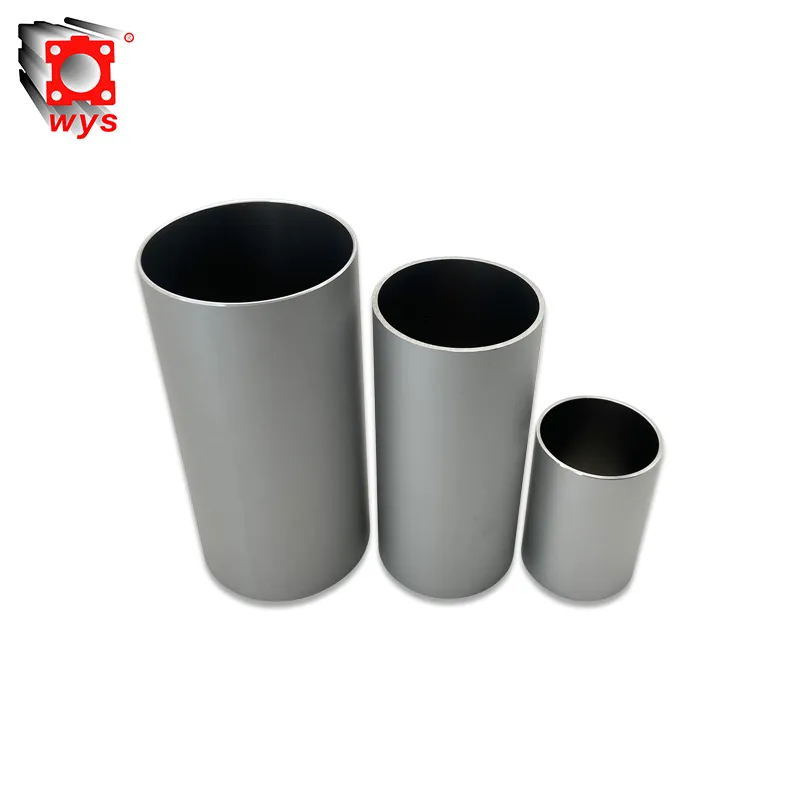
What core role does the pneumatic cylinder barrel play in the cylinder?
Before understanding the working principle of the pneumatic cylinder barrel, it is necessary to clarify its position and role in the cylinder.
The pneumatic cylinder barrel is the main structure of the cylinder.
The pneumatic cylinder barrel is a hollow cylindrical structure, usually located in the middle of the cylinder, with the front and rear end caps connected to its ends.
The piston, piston rod, and sealing components all move within the space formed by the pneumatic cylinder barrel.
Structurally, the pneumatic cylinder barrel is not an auxiliary component, but a prerequisite for the existence of the cylinder.
Is the working principle of the pneumatic cylinder barrel related to compressed air?
The answer is yes, and this is the first key point in understanding the working principle of the pneumatic cylinder barrel.
The working basis of the pneumatic cylinder barrel: compressed air.
Pneumatic systems use compressed air as the power source. When compressed air is introduced into the cylinder:
• Air enters the sealed cavity formed by the pneumatic cylinder barrel and the piston.
• Air pressure acts on the piston end face within the sealed space.
• The pressure is converted into mechanical force that pushes the piston.
The working principle of the pneumatic cylinder barrel is essentially to "provide a controllable, sealed, and stable working space for compressed air."
How does the pneumatic cylinder tube provide a working environment for piston movement?
The principle of sealed space formation
The pneumatic cylinder tube, together with the front and rear end caps and seals, forms a relatively sealed cavity. When air enters one side:
• The gas on the other side is expelled.
• A pressure difference is created on both sides of the piston.
• The piston moves axially under the pressure.
Without the complete and continuous inner wall structure provided by the pneumatic cylinder tube, this sealed environment cannot be established, and the cylinder cannot function.
Guiding and Limiting Function
The inner wall of the pneumatic cylinder tube is not only used for sealing but also performs a guiding function:
• It restricts the piston to axial movement only.
• It prevents the piston from tilting or deviating.
• It ensures a stable and controllable piston movement trajectory.
Therefore, from a working principle perspective, the pneumatic cylinder barrel is a physical constraint structure for the direction of piston movement.
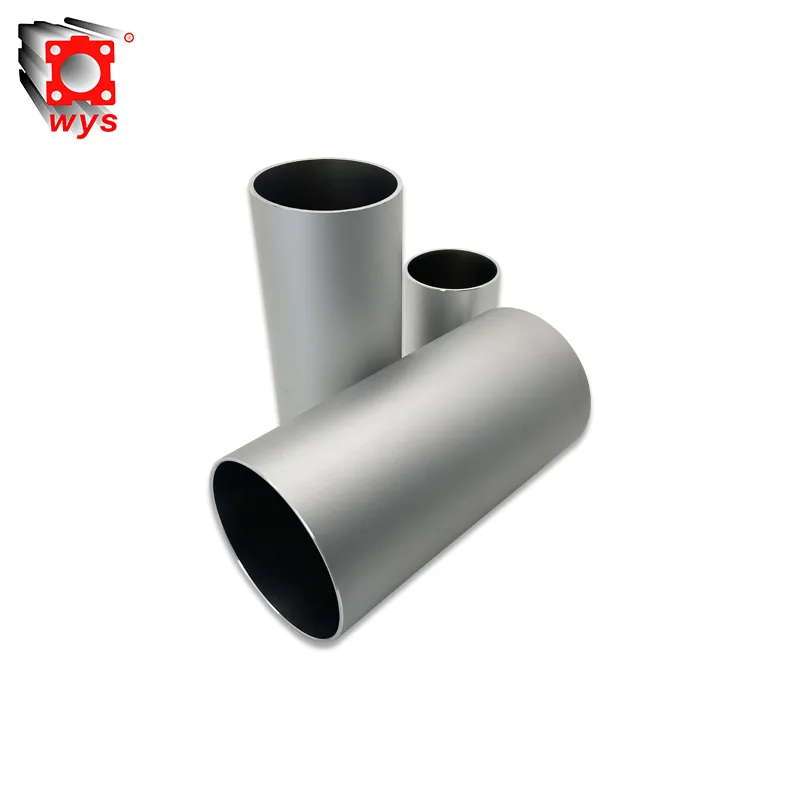
How does the pneumatic cylinder barrel withstand pressure during cylinder movement?
How Internal Pressure Acts
When compressed air enters the inside of the pneumatic cylinder barrel, the pressure acts uniformly on the inner wall of the cylinder barrel and the end face of the piston:
• The piston end face converts the pressure into axial thrust.
• The inner wall of the pneumatic cylinder barrel withstands radial pressure.
During operation, the pneumatic cylinder barrel is essentially a structural component that is subjected to periodic pressure.
Periodic Pressurization and Release
During the repeated operation of the cylinder, the pneumatic cylinder barrel continuously experiences:
• Pressurization
• Pressure stabilization
• Depressurization
This cyclical process determines that the pneumatic cylinder barrel must have sufficient structural strength and stability to maintain dimensional accuracy during long-term operation.
Why does the inner wall condition of the pneumatic cylinder tube affect the working principle?
Many people think that the pneumatic cylinder tube is just "a tube," but in reality, its inner wall condition is one of the key factors for the successful implementation of the working principle.
Inner Wall Smoothness and Friction Relationship
During piston movement:
• The piston seal forms dynamic contact with the inner wall of the pneumatic cylinder tube.
• The smoother the inner wall, the less friction resistance.
• The less friction, the more sensitive the pneumatic response.
Therefore, the inner surface of the pneumatic cylinder tube must be kept clean and smooth to reduce energy loss.
The Impact of Inner Wall Precision on the Sealing Principle
The inner diameter precision, roundness, and straightness of the pneumatic cylinder tube directly determine the stress state of the sealing elements:
• Insufficient precision → Uneven sealing pressure
• Uneven wear → Increased air leakage
• Reduced stability
From a fundamental perspective, the inner wall of the pneumatic cylinder tube is the basic condition for the sealing system to function effectively.
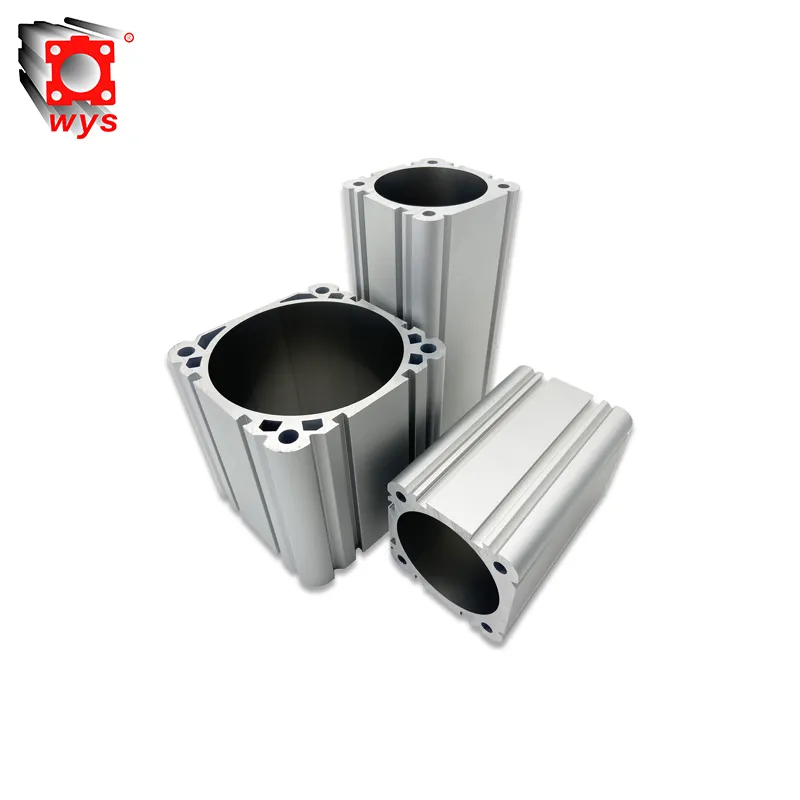
How does the pneumatic cylinder tube work in conjunction with the sealing system?
Sealing is not the function of a single part.
In a cylinder, the sealing effect is not determined solely by the seal ring, but rather by:
Seal ring + pneumatic cylinder tube inner wall = Dynamic sealing system
The pneumatic cylinder tube provides a continuous, regular contact surface for the seal ring, ensuring that the seal ring remains in contact with the inner wall under pressure, thus preventing gas leakage.
Pressure Self-Enhancement Principle.
In operation, the compressed air pressure pushes the sealing element more tightly against the inner wall of the pneumatic cylinder tube, creating the effect of "higher pressure, tighter seal."
This principle is based on the stability of the dimensions and surface condition of the pneumatic cylinder barrel's inner wall.
Is the working principle of the pneumatic cylinder tube different in single-acting and double-acting cylinders?
Essentially, the working principle of the pneumatic cylinder tube is the same; the difference lies only in the way the air acts.
Working principle of the pneumatic cylinder tube in a single-acting structure:
• Air acts only on one side
• The other side is reset by a spring or external force
• The pneumatic cylinder tube mainly provides a unidirectional pressure-bearing space
Working principle of the pneumatic cylinder barrel in a double-acting structure:
• Air can enter alternately from both sides
• The piston achieves bidirectional reciprocating motion
• The pneumatic cylinder barrel needs to withstand bidirectional pressure changes
Regardless of the structure, the essential function of the pneumatic cylinder tube remains consistent: to provide a controllable, sealed, and stable working space.
Why is the pneumatic cylinder tube considered fundamental to the working principle of a cylinder?
Summarizing from a system perspective, the working principle of a pneumatic cylinder can be simplified as follows:
Compressed air → pneumatic cylinder barrel → piston movement → mechanical output
In this chain, the pneumatic cylinder barrel plays a crucial role:
• Without the pneumatic cylinder barrel, the air cannot exert an effective force.
• Without a stable cylinder structure, piston movement cannot be controlled.
• Without suitable inner wall conditions, the sealing principle cannot be achieved.
Therefore, the pneumatic cylinder barrel is not a "passive load-bearing component," but rather the physical foundation upon which the working principle is based.
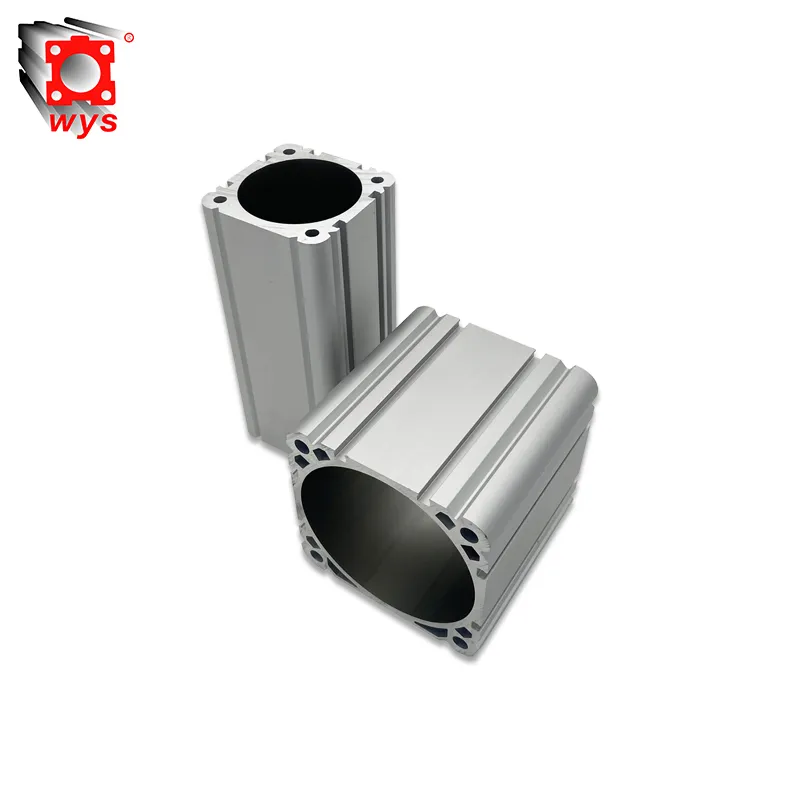
What exactly is the working principle of a pneumatic cylinder tube?
In summary, the working principle of a pneumatic cylinder tube can be summarized as follows:
1. The pneumatic cylinder tube provides a sealed and controllable working space for compressed air.
2. By withstanding air pressure and constraining the direction of motion, it enables the linear movement of the piston.
3. Through a stable inner wall structure, it works with sealing components to achieve dynamic sealing.
4. It maintains structural and dimensional stability during repeated pressurization and depressurization cycles.
Fundamentally, the working principle of a pneumatic cylinder tube is: to convert gas pressure into controllable mechanical motion conditions through a stable mechanical structure.
Why should I choose Weiyingsi brand products?
Our self-owned brand, Weiyingsi, represents quality and precision in pneumatic solutions. As a professional manufacturer and supplier, our company emphasizes strict production standards, including material selection, CNC machining, hard anodizing, and thorough product testing.
By purchasing from us, you can access high-quality cylinder barrels and kits designed for durability, low energy consumption, and high accuracy, making our products a top choice for both wholesale and individual buyers.