

In the field of modern industrial automation, pneumatic systems are widely used due to their simple structure, rapid response, and low maintenance costs. Among pneumatic actuators, the cylinder serves as a core component; its performance directly determines the system's operational efficiency and stability. Notably, the design of the pneumatic cylinder barrel's inner diameter is a critical factor influencing the cylinder's thrust, speed, energy consumption, and service life.
So, how exactly should the inner diameter of a pneumatic cylinder tub be determined? While the question may seem simple, the answer involves multiple dimensions, including mechanical calculations, analysis of operating conditions, adherence to standards, and practical application experience.
This article explores the subject from various angles, providing a systematic analysis of the methods used to determine the inner diameter of a pneumatic cylinder barrel.
Basic concepts and importance of the pneumatic cylinder tub's inner diameter
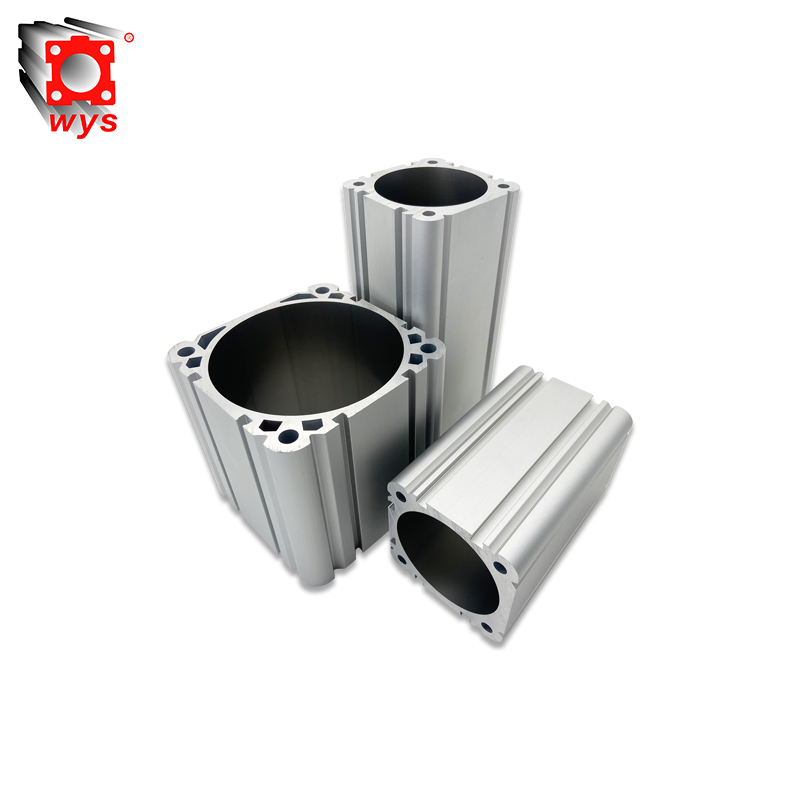
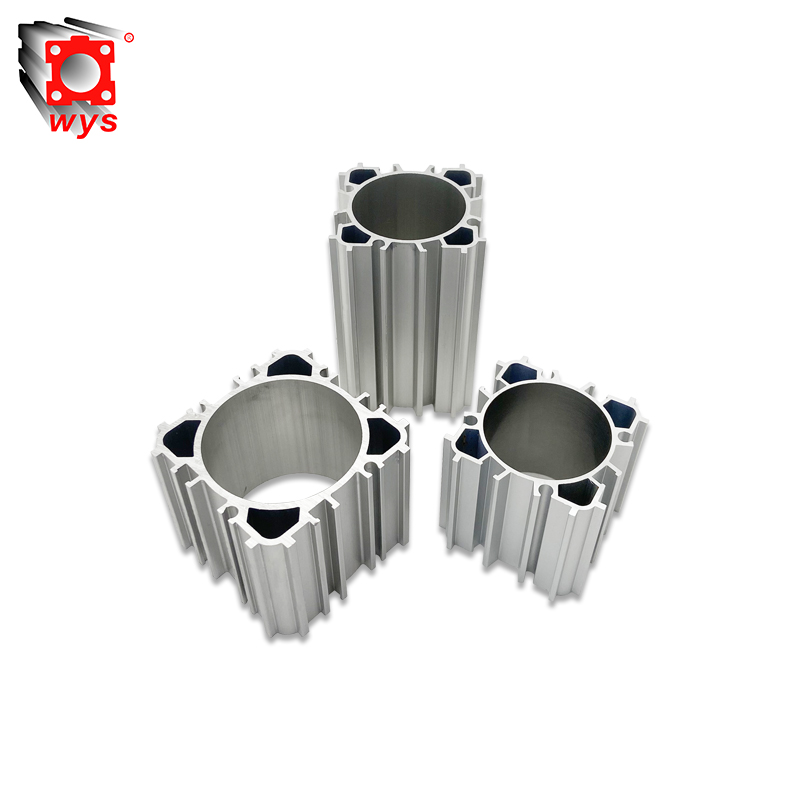
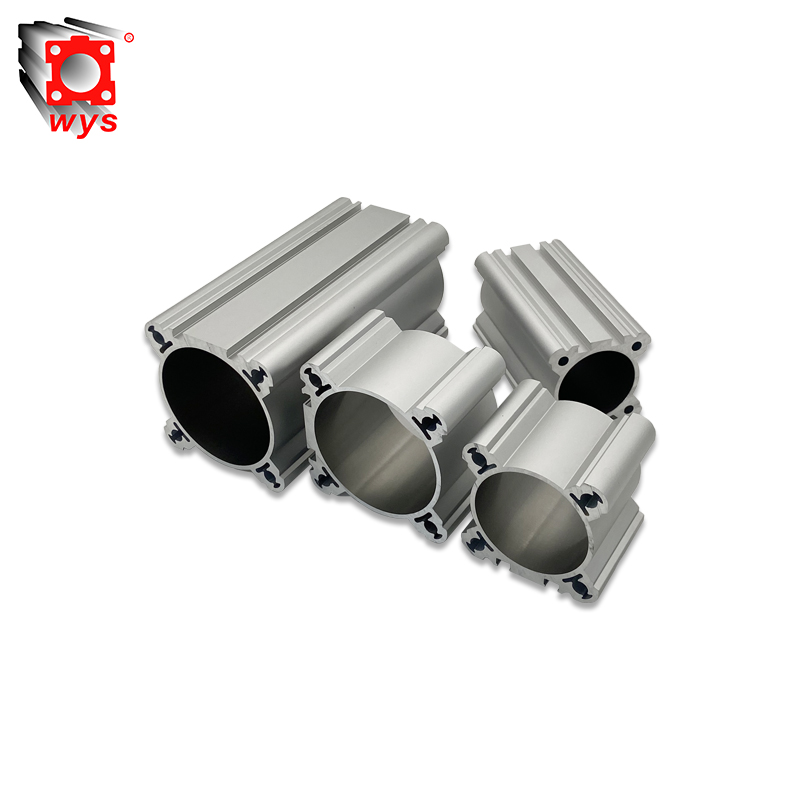
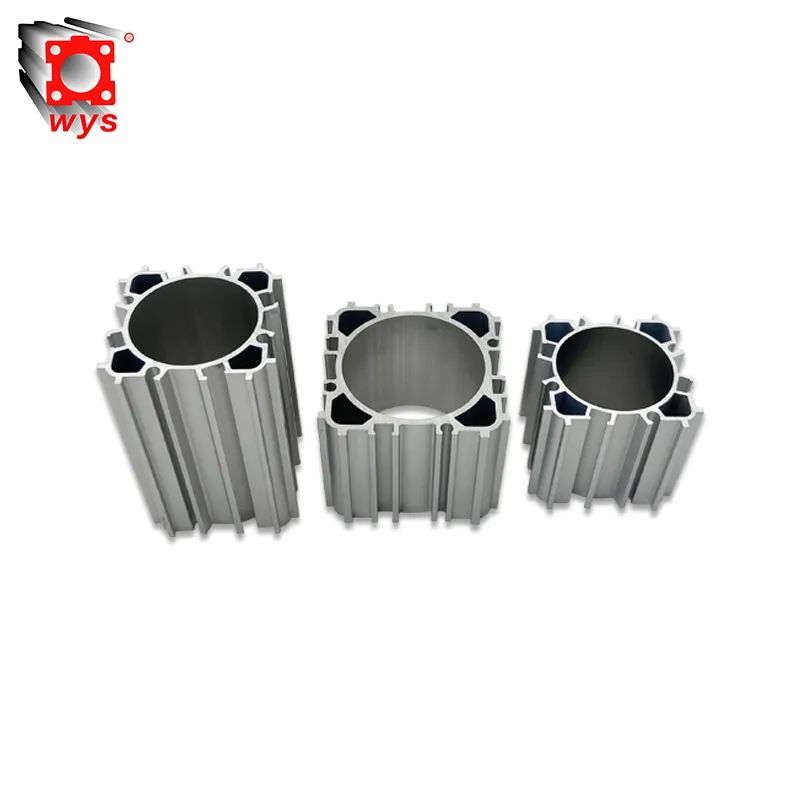
The air cylinder barrel is the core component of a pneumatic cylinder that houses the piston and forms a sealed air chamber; its inner diameter (also known as the bore size) directly determines the cylinder's effective pressure-bearing area.
Based on the formula relating gas pressure to the area subjected to force:
F = P × A
Where:
•F is the output force (Newtons)
•P is the working pressure (Pascals)
•A is the piston area (square meters)
The relationship between piston area A and the air cylinder barrel's inner diameter D is:
A = π × (D² / 4)
From this, it is evident that the larger the inner diameter of the air cylinder barrel, the larger the piston's pressure-bearing area, and consequently, the greater the thrust the cylinder can generate. Therefore, correctly determining the inner diameter is crucial during the design or selection process.
If the inner diameter is chosen to be too small, it may result in insufficient thrust, preventing the equipment from operating correctly; conversely, if it is too large, it leads to wasted energy, slower response times, and increased costs. Thus, selecting the inner diameter requires striking a balance between performance and cost-effectiveness.
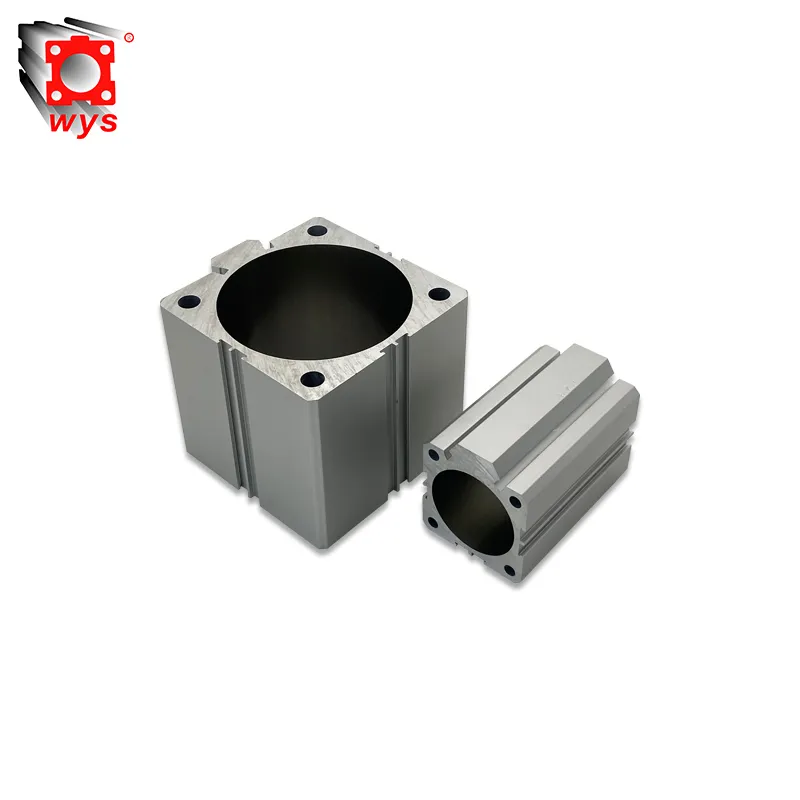
How is the inner diameter of a pneumatic cylinder tub calculated based on the load?
In practical applications, the first step in determining the inner diameter of a pneumatic cylinder barrel is often to consider the load. The load consists of two components: static load and dynamic load.
1. Static Load
Static load refers to the basic resistance the equipment must overcome during motion, such as:
•Workpiece weight
•Friction
•Spring force
2. Dynamic Load
Dynamic load includes the inertial forces generated during acceleration or deceleration; the formula is:
F = m × a
Where m is mass and a is acceleration.
3. Total Load Calculation
The total load is generally calculated as:
F_total = F_static + F_dynamic
In practical engineering, a safety factor (typically 1.2 to 1.5) is applied to ensure the pneumatic cylinder operates reliably under various conditions.
4. Inner Diameter Calculation Formula
Substitute the total load into the cylinder thrust formula:
D = √(4F / (πP))
Using this formula, one can calculate the theoretical inner diameter of the pneumatic cylinder.
How does working pressure affect the inner diameter of the pneumatic cylinder?
When determining the inner diameter, the importance of air supply pressure is often overlooked. In reality, air supply pressure directly affects the cylinder's output force, which in turn influences the choice of inner diameter.
1. Common Air Supply Pressure Ranges
Typical working pressures in industrial pneumatic systems include:
•0.4 MPa
•0.5 MPa
•0.6 MPa (most common)
•0.7 MPa
2. Relationship Between Pressure and Inner Diameter
With a fixed load:
•Higher pressure → Smaller required inner diameter
•Lower pressure → Larger inner diameter required to compensate for insufficient thrust
3. Practical Application Recommendations
While increasing pressure allows for a smaller inner diameter, higher pressure is not always better. Reasons include:
•Increased energy consumption
•Accelerated seal wear
•Increased system safety risks
Therefore, when designing the cylinder, it is best to prioritize standard pressure ranges (e.g., 0.5–0.6 MPa) and then adjust the inner diameter based on specific requirements.
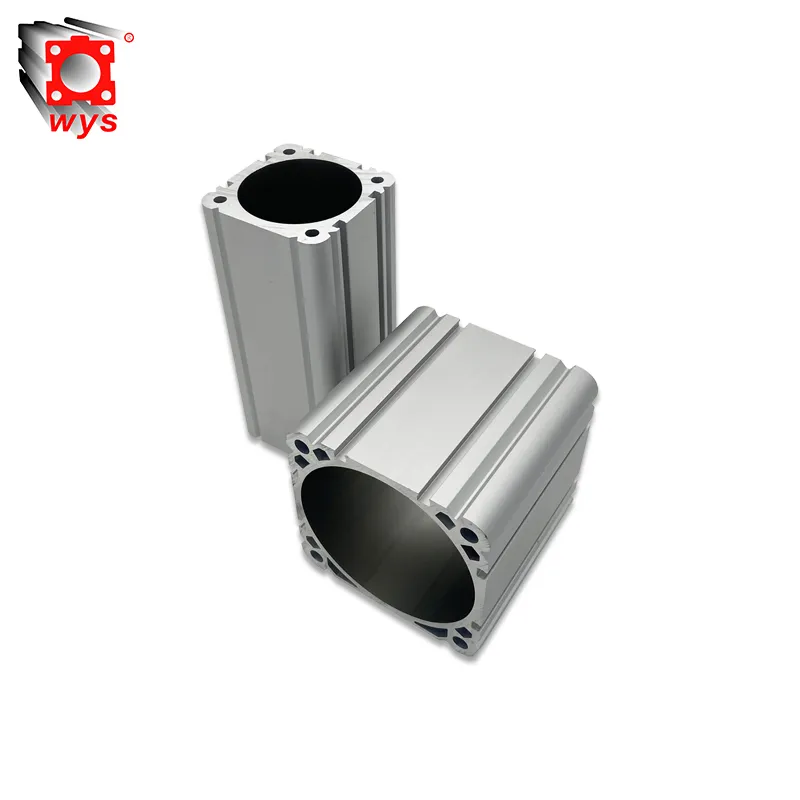
Should friction and efficiency losses be considered when selecting the inner diameter?
This is a critical issue that is often overlooked in engineering practice.
1. Sources of friction loss
Friction within the pneumatic cylinder tub primarily arises from:
•Piston seals
•Guide rings
•Cylinder barrel inner wall roughness
These factors cause the actual output force to be lower than the theoretical value.
2. Efficiency correction
Typically, the mechanical efficiency of a pneumatic cylinder is around:
•85% ~ 95%
Therefore, a correction should be applied when calculating the air cylinder barrel's inner diameter:
F_actual = F_theoretical × η
Or conversely:
F_theoretical = F_required / η
3. Practical engineering recommendations
When calculating the pneumatic cylinder barrel's inner diameter, it is recommended to:
•Use 0.85 as a conservative efficiency value
•Select the next larger standard bore size based on the calculation result
This effectively prevents the issue of insufficient thrust caused by friction losses in the pneumatic cylinder barrel.
How do you match the pneumatic cylinder tub's inner diameter to standard specifications?
In the industrial sector, air cylinder barrels are not usually custom-made to exact calculated values; instead, they are selected based on standard specifications.
1. Common standard inner diameters
Common standard inner diameters for pneumatic cylinder tubs include:
•32 mm
•40 mm
•50 mm
•63 mm
•80 mm
•100 mm
•125 mm
2. Selection principles
Once the theoretical inner diameter is calculated, the following principles should be followed:
•Round up to the nearest standard specification
•Avoid non-standard sizes (unless custom-ordered)
Example:
If the calculation result is 57 mm, a 63 mm pneumatic cylinder barrel should be selected.
3. Why not choose the closest value?
Because in actual operation, the pneumatic cylinder tub is subject to:
•Air pressure fluctuations
•Temperature changes
•Seal aging
Selecting a slightly larger size provides an additional safety margin.
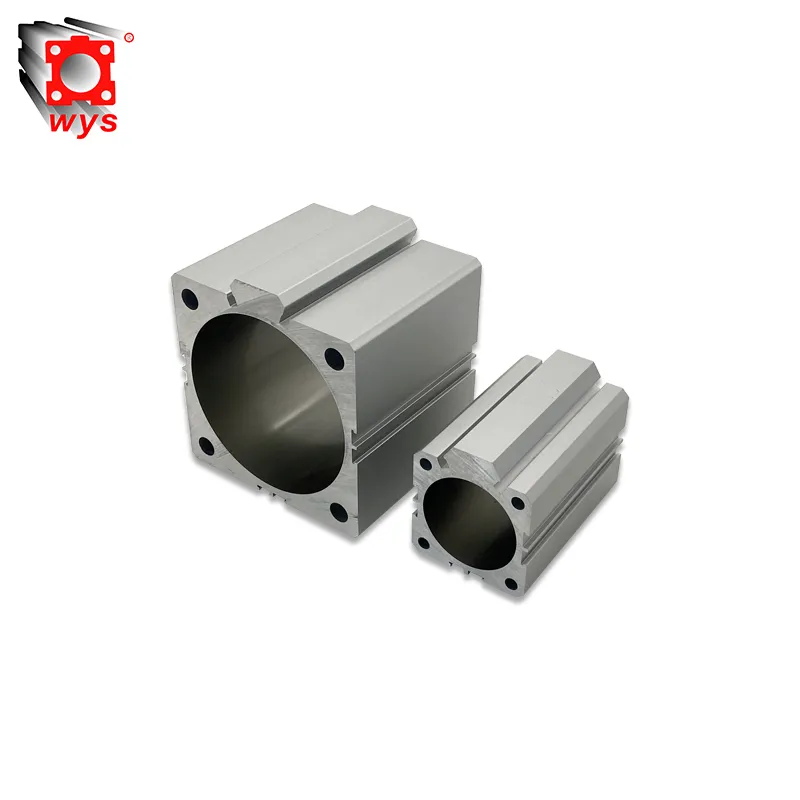
How does the choice of air cylinder tub inner diameter differ across applications?
Selection strategies for the pneumatic cylinder tub's inner diameter vary depending on the application scenario.
1. Automated Assembly Lines
Characteristics:
•High-frequency operation
•Light loads
Recommendations:
•Select a smaller air cylinder barrel bore diameter
•Prioritize response speed
2. Heavy-Duty Handling Equipment
Characteristics:
•Heavy loads
•High stability requirements
Recommendations:
•Select a larger pneumatic cylinder barrel bore diameter
•Increase the safety factor
3. Precision Positioning Systems
Characteristics:
•High precision requirements
•Smooth motion
Recommendations:
•Select a moderate bore diameter
•Use in conjunction with cushioning devices
4. High-Speed Equipment
Characteristics:
•High speed
•High inertia
Recommendations:
•Appropriately increase the pneumatic cylinder barrel bore diameter
•Reduce acceleration time
What is the relationship between the air cylinder tub bore diameter, stroke, and speed?
Many people focus only on the relationship between the bore diameter and thrust, overlooking its impact on speed and stroke.
1. Impact on Speed
Cylinder speed formula:
V = Q / A
Where:
•V = Speed
•Q = Flow rate
•A = Piston area
Therefore:
•Larger bore diameter → Larger area → Slower speed
2. Impact on Stroke
The bore diameter does not directly affect the stroke itself, but:
•Large-bore cylinders are typically used for long strokes
•Small-bore cylinders are better suited for short-stroke, high-speed operations
3. Overall Balance
In design, a balance must be struck between:
•Thrust (requires large bore)
•Speed (requires small bore)
•Energy consumption (requires an optimal bore size)
What are the common misconceptions when selecting the air cylinder tub bore diameter?
In practical engineering, the following misconceptions regarding bore diameter selection are common:
1. Selecting based solely on experience
Many engineers choose the bore diameter based on "gut feeling" rather than performing calculations; while this may work for simple applications, it often leads to problems in complex systems.
2. Ignoring the safety factor
Failing to consider the safety factor can cause the cylinder to operate at its limits for extended periods, thereby shortening its service life.
3. Blindly Pursuing Large Bore Sizes
The assumption that a larger pneumatic cylinder bore is always better can actually lead to:
•Increased energy consumption
•Higher costs
•Greater control complexity
4. Ignoring Air Supply Fluctuations
Actual air supply pressure may fluctuate by ±10%; failing to account for this can result in unstable performance.
How to Systematically Determine the Pneumatic Cylinder Bore Diameter?
Based on the points above, a comprehensive process for determining the bore diameter can be summarized as follows:
1.Define the load (static + dynamic)
2.Determine the operating pressure
3.Calculate theoretical thrust
4.Apply efficiency corrections
5.Calculate the theoretical bore diameter
6.Apply a safety factor
7.Select a standard bore size
8.Verify speed and response time
9.Optimize based on actual operating conditions
Following this process allows for the systematic and scientific determination of the bore diameter, avoiding arbitrary selection.
Are Your Pneumatic Cylinder Barrels Durable?
Durability is a key reason customers choose Weiyingjia products. Our pneumatic cylinder barrels are manufactured to strict standards, emphasizing surface smoothness, precision tolerances, and structural strength. Hard anodizing enhances wear and corrosion resistance for aluminum models, while 304 stainless steel options are available for demanding environments. Compared to standard market offerings, our products are designed for a longer service life and lower energy consumption.
We Are Sincerely Seeking Agents. Welcome To Inquire.